
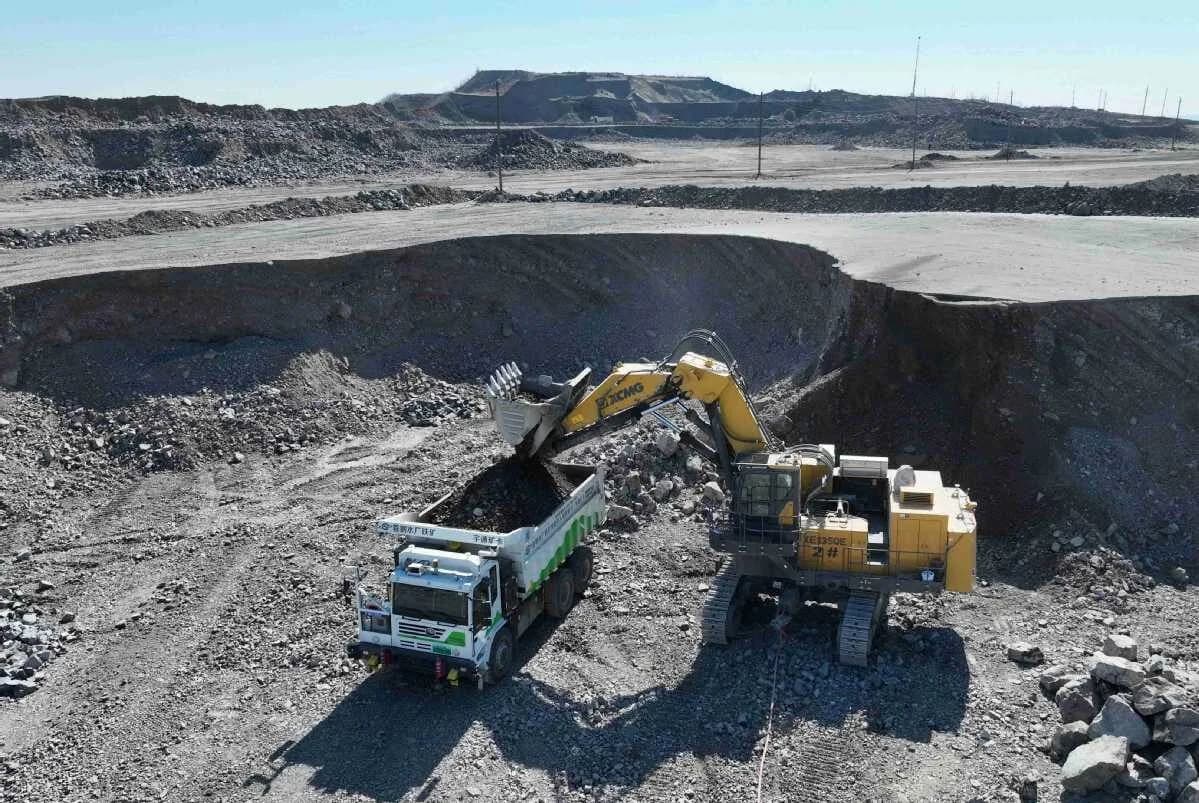
Africa’s mineral wealth has never been more strategically important. Copper, cobalt, lithium, rare earth elements, graphite and other critical minerals are essential to the global energy transition and the technologies shaping the future economy.
For African countries, this presents an extraordinary opportunity. The continent has some of the world’s richest mineral deposits, yet much of its mineral wealth has historically left Africa as raw material, with higher-value processing taking place elsewhere. The challenge now is to ensure Africa captures a greater share of the value created by its resources.
This is where China-Africa mining cooperation deserves serious attention.
China has emerged as an important partner in Africa’s mining sector, bringing investment, technology, infrastructure, industrial expertise and experience across the mineral value chain. Its engagement offers African countries an opportunity to move beyond extraction and build stronger industries around their natural resources.
The timing could hardly be more important.
Demand for critical minerals is rising rapidly as countries invest in electric vehicles, batteries, renewable energy, telecommunications and advanced technologies. Africa is home to many of the resources required for this transformation. Connecting those resources with investment and industrial capacity can help create a new chapter in Africa’s economic development.
China’s experience is particularly relevant because its own economic transformation has been built around industrialisation, infrastructure and manufacturing. Its mining sector has developed capabilities spanning exploration, extraction, processing, equipment manufacturing and increasingly green and intelligent mining.
For African countries seeking to move up the value chain, that experience provides an important foundation for cooperation.
The strongest mining partnerships go beyond extraction to create jobs, transfer skills, develop infrastructure, support local businesses and retain greater value within African economies. This is an area where China-Africa cooperation offers considerable potential.
Value addition should be at the heart of this next phase.
Countries such as Zambia, Zimbabwe and the Democratic Republic of Congo possess significant deposits of copper, cobalt and lithium. Expanding processing and refining capacity can create opportunities for manufacturing, skilled employment and technology development.
Africa should not simply supply the minerals that power the global technology revolution. It should increasingly participate in the industries built around those minerals.
Infrastructure is equally important. Roads, railways, ports, electricity and water systems are essential to mining, but their value can extend far beyond individual projects. When properly integrated into national development plans, mining-related infrastructure can connect communities to markets, support agriculture and stimulate new businesses.
The Simandou iron ore project in Guinea illustrates the scale of infrastructure that can accompany major mining investment, including a deepwater port and a 626-kilometre railway connecting mining areas to the coast.
The wider lesson is that infrastructure created to support mineral development can also become part of the foundation for broader economic transformation.
Technology presents another major opportunity.
At the 2026 China Mining Conference and Exhibition in Tianjin, Chinese companies showcased green technologies, intelligent equipment and digital mining solutions designed to improve mineral recovery, reduce energy consumption, automate operations and integrate renewable energy into mining.
These technologies have significant potential in Africa, where mining companies are increasingly seeking to improve efficiency while reducing their environmental footprint.
Chinese companies are developing solutions that combine automation, digital monitoring, renewable energy and more efficient mineral processing. Such innovations can help African mining operations become more productive and environmentally responsible.
But perhaps the greatest long-term benefit comes when technology is accompanied by knowledge.
Training African engineers, technicians, geologists, environmental specialists and managers can build local capacity that remains long after individual projects have been completed. Skills transfer turns investment into lasting human capital.
The same applies to employment and local enterprise.
Mining can become a powerful driver of development when local communities participate in its economic ecosystem. Local procurement, vocational training, scholarships, enterprise development and community investment can help ensure that mining benefits extend beyond the mine itself.
Environmental responsibility must also remain central to the future of mining.
China’s growing experience in green mining and ecological restoration offers another area for practical cooperation. Africa has an opportunity to embrace China’s modern approaches to green mining, water recycling, efficient processing, waste utilisation, land rehabilitation and green energy.
Kenya’s participation in the 2026 China Mining Conference in Tianjin is therefore significant.
Mining Cabinet Secretary Hassan Joho used the platform to promote Kenya’s investment opportunities and highlighted deposits of critical minerals including coltan, copper, lithium, niobium and rare earth elements. He also outlined reforms aimed at strengthening governance, transparency and predictability in the sector.
For Kenya, engagement with global mining investors presents an opportunity to attract capital and technology while developing the capabilities needed to participate more meaningfully in the mineral value chain.
China can be an important partner in that journey.
China-Africa cooperation should therefore be viewed not simply through the lens of mineral extraction, but as part of a broader industrial partnership.
Africa has the resources. China has accumulated extensive experience in industrialisation, infrastructure development, technology and manufacturing. The combination creates considerable room for cooperation.
The opportunity now is to deepen that relationship.
If China-Africa mining cooperation continues to focus on value addition, skills transfer, infrastructure, technology, environmental responsibility and local participation, it can help transform Africa’s mineral wealth into a much broader development dividend.
The future of African mining should not be defined simply by how much is extracted from the ground. It should be defined by what that wealth builds above the ground: industries, infrastructure, skills, businesses, technology and opportunities for future generations.
Africa has the minerals the world needs. China has demonstrated the capacity to help build industries around them. Turning that complementarity into deeper industrial cooperation can make mining an important pillar of Africa’s next phase of economic transformation and shared prosperity.
Elijah Mwangi is a scholar based in Nairobi who comments on local and global affairs.


Comments
No comments yet. Be the first to share your thoughts.