
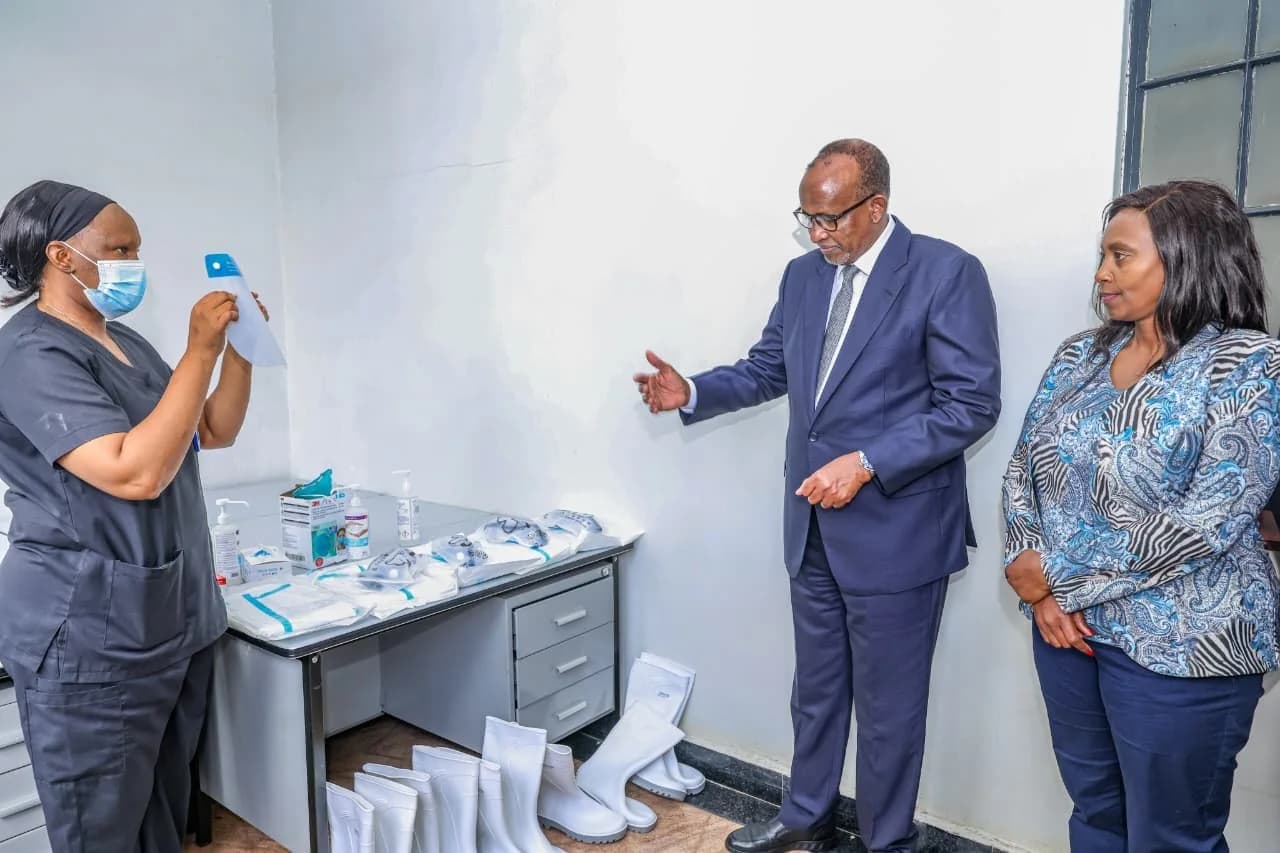
Ebola infections among Kenyan health workers raise safety concerns after treating Patient Zero

Pathologist Ahmed Kalebi has questioned the circumstances surrounding the infections, calling for a clear timeline of events and an investigation into the safety measures used when the patient was treated at The Nairobi Hospital.
Concerns have emerged over the safety of healthcare workers after three staff members who treated Kenya’s first confirmed Ebola patient tested positive.
The Ministry of Health confirmed that the three workers were among four new cases reported on Saturday, October 17, bringing the country’s total confirmed cases to seven, including the first patient who died.
The three workers reportedly came into contact with patient zero on October 3 and 4 but entered quarantine on October 9, prompting questions over why they were not quarantined earlier and whether they had been adequately protected while caring for the patient.
Pathologist Ahmed Kalebi has questioned the circumstances surrounding the infections, calling for a clear timeline of events and an investigation into the safety measures used when the patient was treated at The Nairobi Hospital.
The concerns follow earlier assurances from the Ministry of Health and the hospital regarding the handling of the first patient, who was reportedly isolated shortly after arriving at the hospital on October 3.
On October 6, the Ministry of Health said the patient had been “quickly isolated” at the hospital’s accident and emergency department before being transferred to its isolation facility.
Latest Stories
- From homes to hospitals, President Ruto rolls out major development projects in Nandi
- African countries could save billions by cutting air pollution and greenhouse gases at the same time
- Nominated Senator Crystal Asige joins Winnie Odinga and Jalang’o in Nairobi Senate race
- Tusker FC suffer home defeat as Singida strike puts CAF Confederation Cup hopes at risk
The hospital also stated, “Our staff worked in full protective equipment under supervision.”
However, the confirmation that three healthcare workers had contracted the virus has raised questions over when full infection-control measures were introduced and whether any staff members were exposed before the necessary precautions were in place.
Kalebi questioned when viral haemorrhagic fever was first suspected and whether there had been any contact with the patient without adequate protection. He also sought answers on how long any such exposure may have lasted.
Other concerns include whether safety breaches occurred during patient care, the handling of samples, cleaning or the removal of protective equipment, as well as whether other people had similar exposure to the virus.
The pathologist also questioned why the three healthcare workers entered quarantine on October 9, several days after their reported contact with the patient, and what monitoring measures or restrictions on their work applied during that period.
He called on the Ministry of Health and The Nairobi Hospital to explain the sequence of events and share the findings of investigations into the infections.
“These are legitimate questions of clinical audit, occupational safety and public accountability. They deserve clear answers,” he said.
Kalebi noted that isolating an Ebola patient does not, on its own, guarantee the safety of healthcare workers providing treatment. He called for a thorough investigation into the circumstances surrounding the infections, while cautioning against concluding the cause before the findings are established.
“These infections warrant a thorough occupational exposure investigation, although they do not, by themselves, establish precisely where or how protection failed,” he said.
He added that identifying the infections among people in quarantine was encouraging but did not explain how they contracted the virus. He warned that more cases could emerge among exposed contacts during the monitoring period.
Kalebi urged the authorities to release a clear timeline and share verified findings as they become available, saying the information would help protect frontline workers, improve the response and maintain public confidence.
He also called for those infected, their families and people in quarantine to receive proper care and support as investigations continue.
The Ministry of Health said the four new cases announced on Saturday involved a close male relative of the first patient and the three healthcare workers who treated him during his hospital stay.
Health Director General Patrick Amoth said the male relative had been in quarantine since October 6, while the three healthcare workers had been in quarantine since October 9.
All four patients developed fever as their first symptom and were immediately isolated before samples were collected for testing.
The samples tested positive for Bundibugyo virus disease at both the National Virology Reference Laboratory and the Kenya Medical Research Institute (KEMRI) laboratory.
The ministry said the four patients were receiving supportive care at designated treatment facilities. It added that the second and third patients reported earlier were stable and responding well to treatment.
Amoth said the early identification of the latest cases had been made possible by quarantine measures, which helped reduce the risk of further transmission to family members and the wider public.
“The risk to the general public remains low as there is no evidence of community transmission of the disease,” the ministry said.
The Ministry of Health said 128 of 130 contacts had been traced and quarantined, representing 98.5 per cent, above the 85 per cent global benchmark for contact tracing.
Efforts to trace the remaining two contacts are ongoing, with health teams monitoring those in quarantine for 21 days and warning that more cases could emerge.
The ministry said four family members of the deceased patient and healthcare workers who treated him remained under close monitoring. It maintained that Kenya was open for business, with no restrictions on travel, trade or public gatherings.
Kenyans have been urged to remain vigilant, with the ministry noting that Ebola spreads through direct contact with the blood or other body fluids of infected or deceased people, not through the air.
Anyone experiencing fever, unusual tiredness, muscle or joint pain, sore throat, vomiting, diarrhoea or unexplained bleeding should seek immediate medical attention.

Comments
No comments yet. Be the first to share your thoughts.