
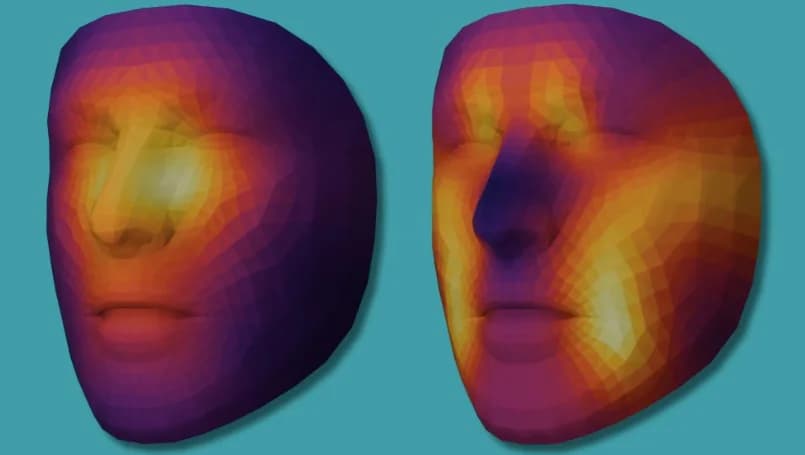
Scientists develop AI tool that predicts cancer patients’ survival chances from facial photographs

Researchers say an AI model trained on more than 40 million facial images could help doctors predict cancer patients’ survival and assess their readiness for intensive treatment.
Researchers have developed an artificial intelligence tool that can predict cancer patients’ survival outcomes from a photograph of their face, potentially giving doctors another way to assess patients before recommending treatment.
The technology, known as FAHR-Face (Foundation Artificial Intelligence for Health Recognition), was developed by researchers at Mass General Brigham, a US medical and research institution, using more than 40 million facial images.
The team developed two tools using the same AI model. One estimates a person’s apparent age based on facial signs of ageing, while the other predicts cancer patients’ survival outcomes by analysing their facial features.
The researchers found that cancer patients who appeared biologically older than their actual age tended to have poorer survival outcomes. They also found that combining the two tools improved survival predictions when tested on a separate group of cancer patients.
Hugo Aerts, one of the study’s senior authors, said the findings showed that a simple facial photograph could reveal information associated with cancer survival.
“FAHR-Face advances the field of facial health recognition AI a step further by learning survival risk directly from facial photographs of patients with cancer,” Aerts said.
Latest Stories
- Namibia's mining outlook worsens amid diamond slump, rising costs
- Ninth Ebola case puts Kenya's Health Ministry under pressure to explain transmission chain
- Funding cuts leave half a million people without food assistance in Gaza
- Boeing unveils AI-powered platform to transform aircraft maintenance and airline operations
“To our knowledge, this is the first demonstration that an AI model can directly predict cancer survival from a simple photograph.”
The researchers hope the technology could eventually help doctors assess patients’ physical readiness for demanding treatments such as surgery, radiation or cancer drugs. The tool could provide additional information to guide decisions on whether patients are fit enough to undergo intensive treatment.
“As the population ages, physicians need better ways to estimate physical reserve and frailty before recommending intensive treatments such as radiation, surgery or systemic therapy,” said Raymond Mak, the study's corresponding author.
“Our goal is to make face photograph-based health assessment more quantitative, consistent and scalable so it can support personalised treatment decisions rather than replace physician judgment.”
The study also examined links between lifestyle habits and facial ageing. Current smokers tended to appear biologically older than former smokers, while former smokers appeared older than people who had never smoked. Heavy alcohol consumption and drug use were also associated with an older appearance.
The researchers are continuing their work through an online study that allows members of the public to upload photographs and receive estimates of their facial age. The data collected will help the team evaluate the technology across larger and more diverse populations.
However, further research is needed to establish how reliably the tool can predict cancer survival and whether its use can improve treatment decisions in hospitals.


Comments
No comments yet. Be the first to share your thoughts.