
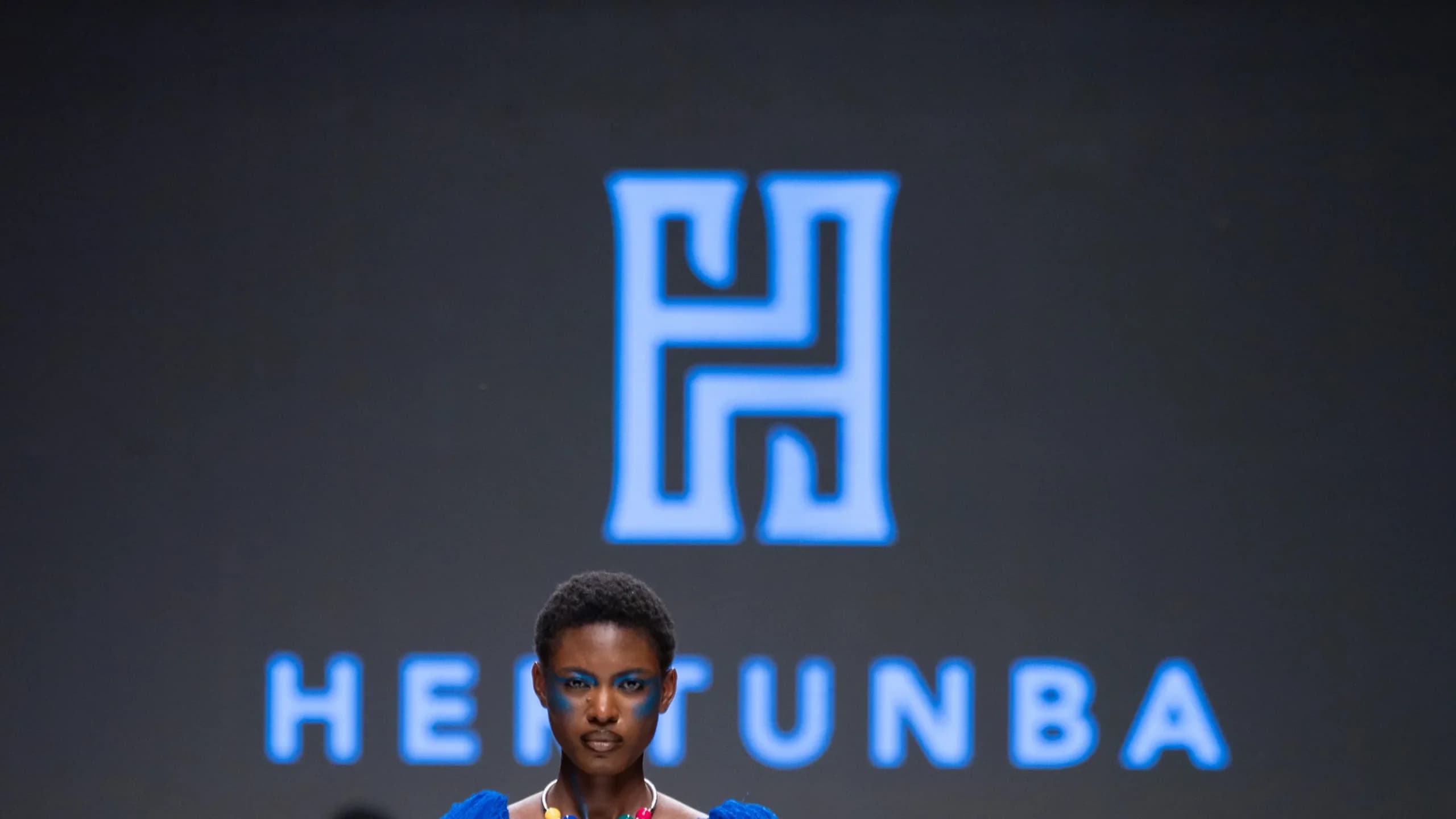
What happens when fashion stops asking women to cover up and starts giving them permission to take up space? For Nigerian designer Florentina Agu, the answer is a wardrobe that challenges conventional ideas of modesty, celebrates femininity and puts women in control of how they dress.
Her label, Hertunba, presented its Spring 2027 collection during Lagos Fashion Week, exploring an imagined women-led society where fashion is no longer policed and women are free to dress boldly. The collection draws from Agu’s personal experiences growing up as a firstborn daughter in a religious and conservative household. Despite her independence, the designer told Vogue that she still encounters restrictions around what she feels comfortable wearing.
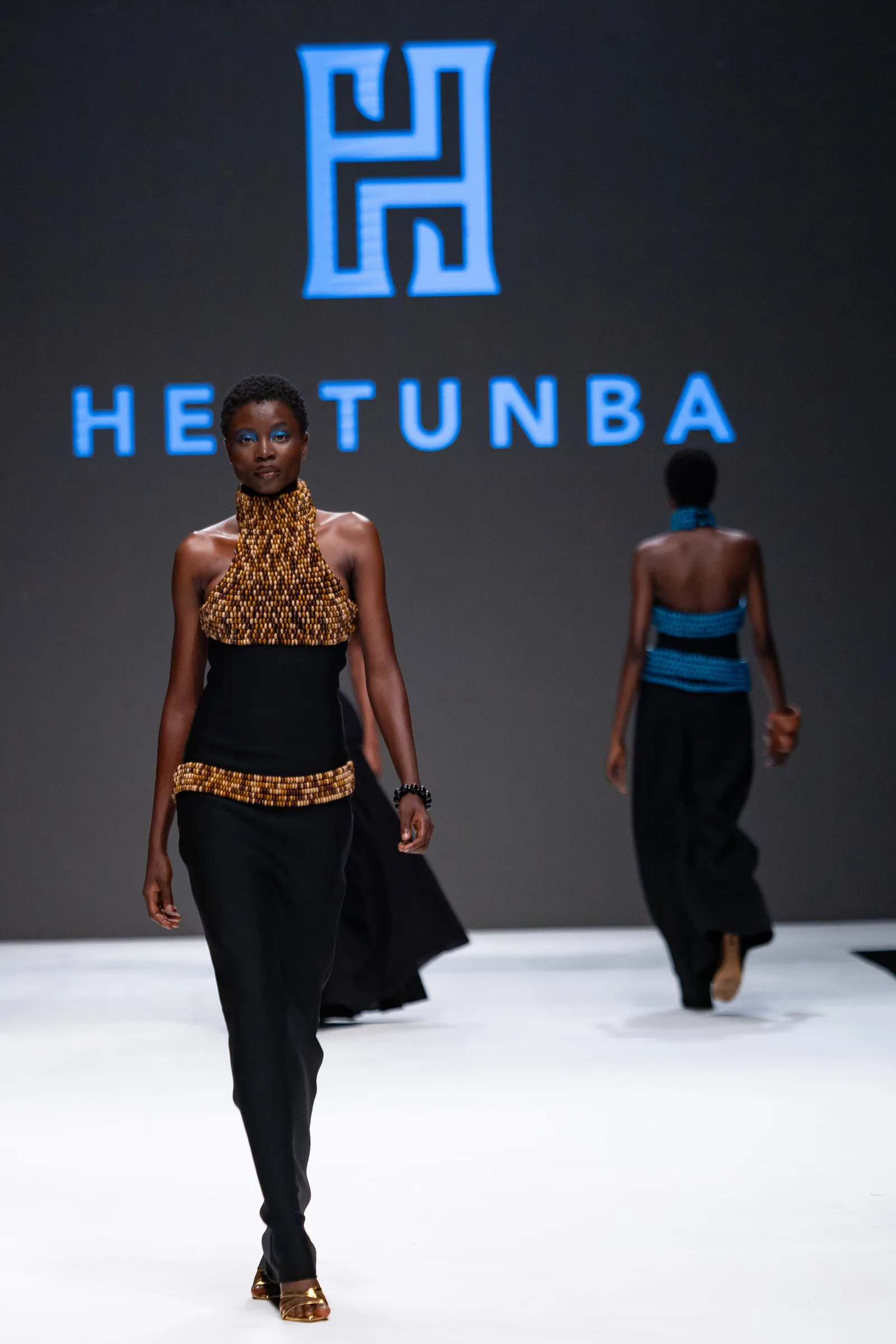
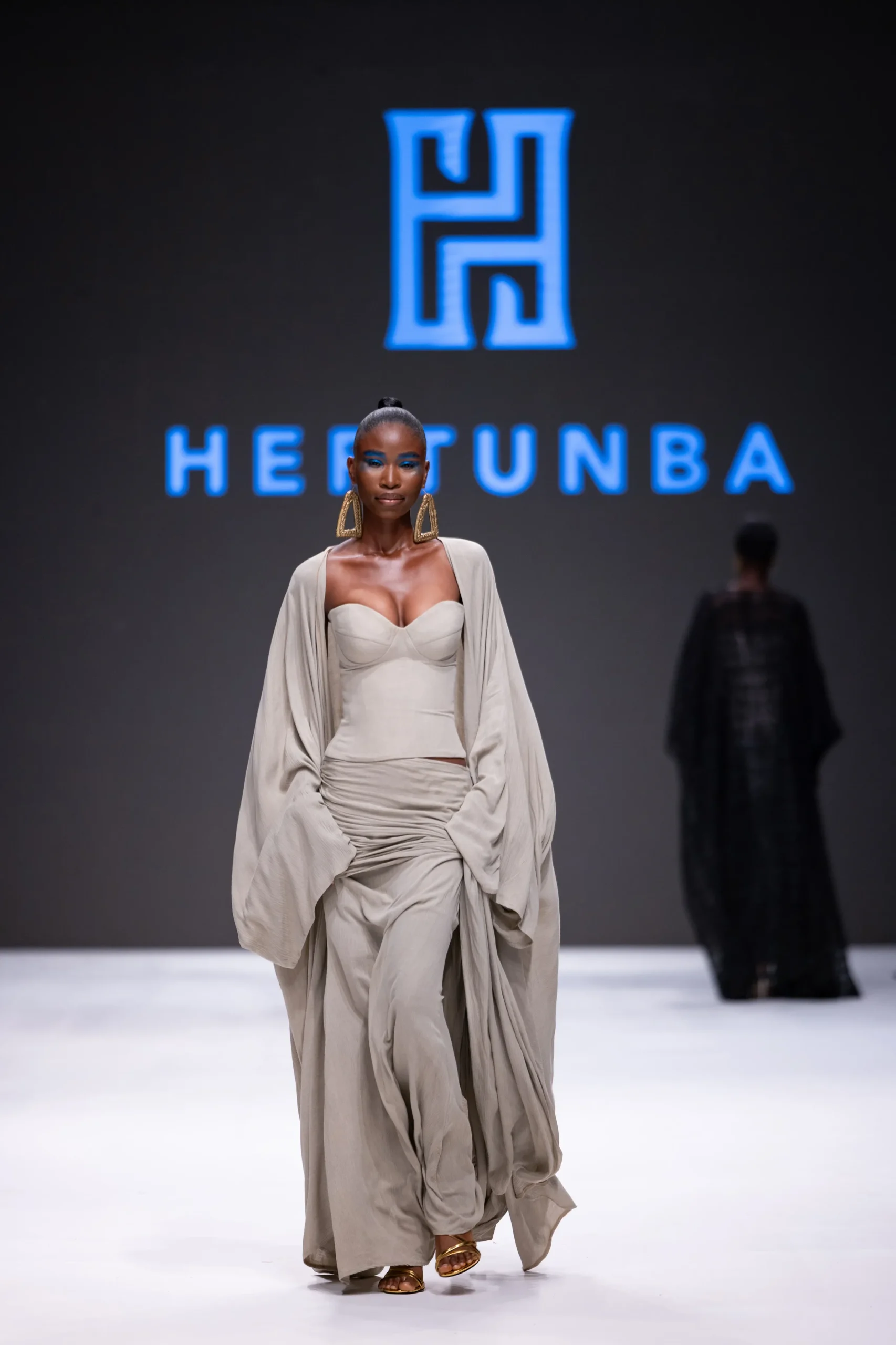
That tension became the creative starting point for a collection that questions the social expectations placed on women’s bodies and their relationship with clothing. Rather than abandon the label’s established design identity, Agu expanded its vocabulary. Hertunba’s signature handwoven Akwete skirts and fitted dresses remained central, but were accompanied by shorter, playful silhouettes designed to challenge conventional perceptions of modest dressing.
Lace and wooden beads introduced additional texture, while a blue-and-cream mini dress with fringe detailing and a black sequinned maxi dress emerged among the standout runway looks. The proposition is straightforward: women should be able to enjoy fashion without constantly negotiating society’s expectations of how much skin they can show.
African craftsmanship meets contemporary commerce
Beyond its fashion statement, Hertunba’s latest collection highlights the commercial possibilities of African textile heritage. The label’s continued use of handwoven Akwete fabric places traditional Nigerian craftsmanship within a contemporary luxury-fashion conversation, demonstrating how indigenous materials can move beyond conventional cultural and ceremonial dressing.
The collection also reflects the production realities of artisanal fashion. Working closely with artisans months ahead of the presentation, Agu prepared the pieces for immediate online availability following the runway show. The see-now, buy-now approach is particularly relevant for consumers in tropical and equatorial markets, allowing shoppers to access seasonal designs without waiting for conventional retail cycles.
For a fashion business working extensively with handwoven materials, advance production planning is essential. Artisanal craftsmanship requires time, coordination and skilled labour, making the alignment between runway presentation, production readiness and online retail an important commercial consideration.
A label speaking to more than one generation
Hertunba’s appeal also lies in its ability to connect with women across different generations and body sizes. Vogue’s coverage noted that the Lagos show attracted an audience that included women wearing both new and older Hertunba designs, suggesting an established relationship between the label and its customers.
That connection matters in a fashion market where brand loyalty is increasingly built around more than seasonal trends. Consumers are also buying into identity, craftsmanship, personal expression and the values associated with the labels they wear.
Agu’s latest collection brings these elements together through a proposition that is culturally grounded but commercially forward-looking. As African designers continue to explore the intersection of heritage, innovation and contemporary retail, Hertunba offers another example of how traditional craftsmanship can find relevance in modern wardrobes.
And perhaps its most compelling fashion statement is also its simplest: women should be allowed to decide what makes them feel beautiful.
Step into Hertunba’s Spring 2027 collection. Photography: Courtesy of Kola Oshalusi:






Comments
No comments yet. Be the first to share your thoughts.