
Have you ever worn your favourite perfume in the morning, only to smell musty or sweaty before the day is over? Or perhaps you fell in love with a fragrance at first, but months later it started to feel overpowering or simply didn’t smell the same on you.
The truth is, smelling good isn’t just about buying an expensive perfume. Your body chemistry, skincare routine, application technique, and even the clothes you wear all play a role in how a fragrance performs throughout the day.
If you perspire heavily, it may also be worth examining factors such as your diet, hydration, stress levels, choice of fabrics, or speaking to a healthcare professional if excessive sweating is becoming a concern. Breathable fabrics like cotton and linen can also make a significant difference.
Once you’ve addressed those factors, learning how to apply perfume correctly can help your fragrance last longer and smell better.
Understand Perfume Notes
Choosing a perfume isn’t just about how it smells when you first spray it.
Every fragrance develops in three stages:
Top notes are the scents you notice immediately after spraying. These are often citrus, fruity, aquatic, or light floral notes. While they’re fresh and inviting, they usually disappear within 15–30 minutes.
Heart notes (also called middle notes) emerge once the top notes fade. They form the personality of the perfume and often include floral, spicy, fruity, or green accords.
Base notes are the longest-lasting scents. They usually include woods, musk, vanilla, amber, patchouli, leather, or resins and remain on your skin for several hours.
Instead of deciding immediately whether you like a perfume, spray it on the inside of your wrist and wait about 20 minutes. This allows the fragrance to develop so you can experience its true character before making a decision.
Apply Perfume to the Right Areas
Perfume performs best on warm areas of the body where blood vessels sit close to the skin.
Good places to apply perfume include:
- Inside the wrists
- Inside the elbows
- Behind the knees
- Calves
- Ankles
- Around the midriff or lower torso (under clothing)
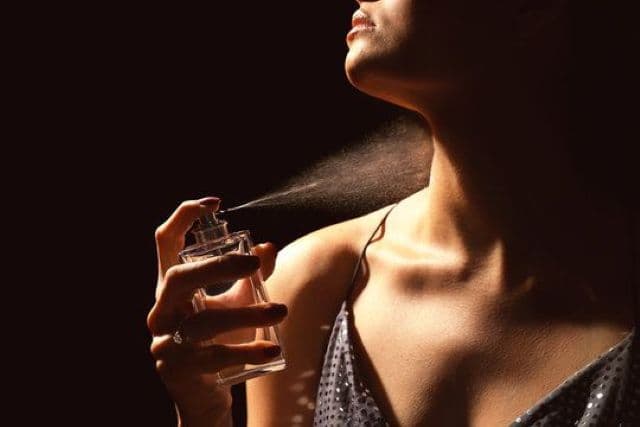
Recent discussions around fragrance application have also encouraged people to avoid routinely spraying perfume directly on the front or sides of the neck. While there is no conclusive evidence linking perfume to problems with the lymphatic system, the neck contains delicate skin and numerous superficial lymph nodes. Repeated exposure may increase the risk of skin irritation or sensitivity, especially for people with allergies or sensitive skin. Applying perfume to other pulse points can provide excellent longevity while reducing unnecessary exposure to this delicate area.
Avoid spraying perfume directly into your armpits. Antiperspirants are specifically designed for that area and are much more effective at controlling perspiration and odour.
Don’t Rub Your Perfume
One of the most common perfume mistakes is rubbing your wrists together after spraying.
Although many people believe this helps the fragrance absorb, rubbing actually creates friction and heat, which can alter the way the fragrance develops and cause the delicate top notes to fade more quickly.
Instead, simply spray and allow the perfume to dry naturally.
Find Your Signature Scent
Every person’s skin chemistry is unique.
The same perfume can smell completely different on two people because body temperature, skin oils, diet, and hormones all influence how fragrance develops.
Once you’ve discovered fragrances that complement your body chemistry, try using an unscented body wash or moisturiser, or choose products with notes that complement your perfume. Mixing conflicting fragrances can make even an expensive perfume smell unbalanced.
Building your skincare and fragrance routine around similar scent families creates a beautiful signature scent that’s uniquely yours.
Know Your Fragrance Strength
Not all fragrances are created equal.
Understanding fragrance concentrations will help you choose the right product for different occasions.
- Body Mist/Splash: Lightest concentration; lasts about 1–3 hours.
- Eau de Cologne: Light and refreshing; typically lasts 2–4 hours.
- Eau de Toilette (EDT): Suitable for daytime wear; lasts 4–6 hours.
- Eau de Parfum (EDP): Richer concentration; lasts 6–8 hours or longer.
- Parfum/Extrait: Highest concentration; often lasts all day with only a few sprays.
Knowing these differences prevents overapplication and helps you choose a fragrance that matches your lifestyle.
Fragrance Hacks That Really Work
Small changes can dramatically improve how long your perfume lasts.
- Apply perfume immediately after showering while your skin is clean and slightly hydrated.
- Moisturise first. Fragrance clings much better to hydrated skin than dry skin. Petroleum jelly or an unscented moisturiser works particularly well.
- Spray from about 5–7 inches away for even coverage.
- If you’d like your hair to carry fragrance, spray your hairbrush rather than your hair directly, as alcohol can dry hair strands.
- Line drawers with scented paper or lightly scented fabric liners.
- Place a scented soap inside your wardrobe to keep clothes smelling fresh.
- Layer fragrances carefully by applying stronger scents first, followed by lighter complementary fragrances.
- Match your perfume to the occasion. Lighter fragrances work well during the day, while richer scents often suit evening events.
Less Is More
We’ve all experienced someone wearing so much perfume that they announced their arrival before entering the room.
Don’t be that person.
Your nose quickly becomes accustomed to your own fragrance, making you think it has disappeared when everyone else can still smell it.
A few sprays are usually enough.
If you anticipate needing a touch-up later, spray perfume onto a few cotton buds, seal them in a small zip-lock bag, and carry them in your handbag. This is much more practical than carrying an entire perfume bottle.
Store Your Perfume Properly
Heat, humidity, and direct sunlight gradually break down fragrance molecules, changing both the scent and its longevity.
Store your perfumes in a cool, dry place away from windows, bathrooms, and direct sunlight.
Keeping them in their original boxes or inside a cupboard helps preserve their quality for much longer.
Final Thoughts
Perfume is more than just a pleasant scent—it is an extension of your personality, style, and confidence.
Choosing a fragrance that complements your body chemistry, applying it correctly, and caring for your skin can make a significant difference in how long it lasts and how beautifully it develops throughout the day.
Rather than chasing compliments with more sprays, focus on wearing your fragrance thoughtfully. The goal isn’t for everyone in the room to smell your perfume—it’s for those close to you to catch a subtle, memorable scent that becomes uniquely you.
Check out



Comments
No comments yet. Be the first to share your thoughts.