
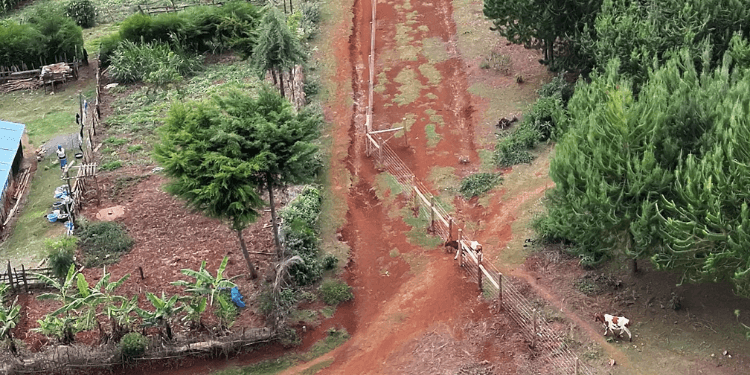
While on a fact-finding mission to assess the ongoing fencing of Kaptagat Forest following recent demonstrations in Kitany Shopping Centre, Elgeyo Marakwet County, our team made an unexpected discovery from the air.
Captured by our drone, the fencing project reveals a conservation model that challenges the perception that fencing automatically locks communities out of forests.
Instead, the Kaptagat design incorporates negotiated access points that protect the ecosystem while preserving long-established community user rights.
Beyond the major roads linking wards and constituencies, which remain open 24 hours a day, and the large gates serving vehicles and forest operations, the aerial footage reveals dozens of small gates strategically positioned along villages bordering the forest.
According to residents, the people and livestock access gates were incorporated into the design following extensive public participation involving the Kenya Forest Service (KFS), Community Forest Associations and forest-adjacent communities before construction began.
Unique Kaptagat Forest Fence Has Small Livestock Gates for Grazing
The gates allow residents to continue accessing the forest to enjoy their user rights through the Community Forest Associations (CFA)as per the Forest Act, including grazing livestock, while helping curb encroachment and illegal forest destruction.
Gideon Kipchumba, a resident of Kaptagat, says the fencing project has been accompanied by continuous engagement between KFS and local communities, enabling residents to understand their legal user rights under the Forest Conservation and Management Act.
“Beyond the public participation process, we also received training on our user rights, and I can confidently say the community has been fully involved. We continue to access water, graze our livestock and exercise other sustainable economic and cultural rights. We have also benefited from forest restoration initiatives such as coffee farming and biogas projects.,” Kipchumba said.
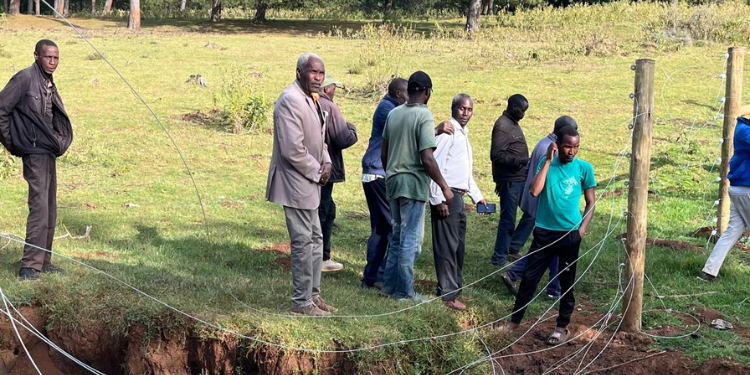
Community members distanced themselves from the fence vandalism and called on police to investigate the incident, with many alleging that political interests and external funding were behind the destruction.
“There is politics behind this. Political interests are what led to the fence being vandalised. We are telling Government leaders and politicians not to drag their political rivalries into our community. Let them settle those battles at the top, not at the community level. We do not want one-term or two-term politics here. We will decide who to support,” Gerald Motokaa alleged.
Kipchumba maintained that none of the residents from their locality in Kaptagat had participated in the recent demonstrations.
“As for the demonstrations that took place, not a single person from this area participated. Whoever is plotting and financing those protests should stop hiding. We challenge them to come out in the open instead of operating in the shadows. We will continue to condemn their actions,” he told reporters.
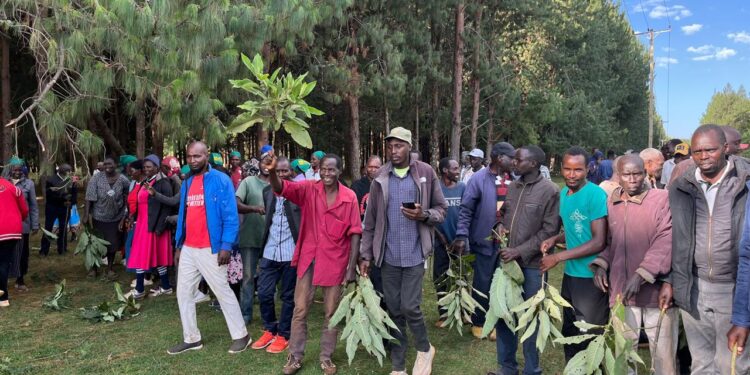
Residents Reject Misinformation Claims Over Kaptagat Forest Fence
Residents called for swift police investigations to identify those responsible and prevent the situation from escalating.
“The people who did it came from elsewhere, and we do not know them. Our children were not involved.” said Ben Serem, a long-time Kaptagat resident who participated in the restoration of the forest.
The meeting also evolved into a fact-checking and myth-busting session, with residents responding to claims they said had fuelled fear and misinformation about the fencing programme despite the benefits already being realised.
“Those claims that dangerous wild animals will be brought here are completely false. The only wildlife we have are our cows, goats, sheep and other small forest animals,” Caroline Biwott clarified.
Kipchumba echoed the same position, dismissing the rumours as baseless.
“There are no wild animals here, and the claims that dangerous wildlife will be introduced into Kaptagat are nothing but misinformation. You cannot simply force an ecosystem to accommodate wildlife that does not belong here. Those rumours are completely false,” he insisted.
He added that protecting the forest had become even more critical in the face of climate change.
“We are experiencing drought and the effects of climate change, so we are working together to ensure Kaptagat fores remains intact. As we witness these prolonged dry conditions, we are not even sure whether we will harvest maize from our farms. Conserving this forest is one of the ways we protect our rivers, our climate and our future.”
Follow our WhatsApp Channel and X Account for real-time news updates.

Comments
No comments yet. Be the first to share your thoughts.