
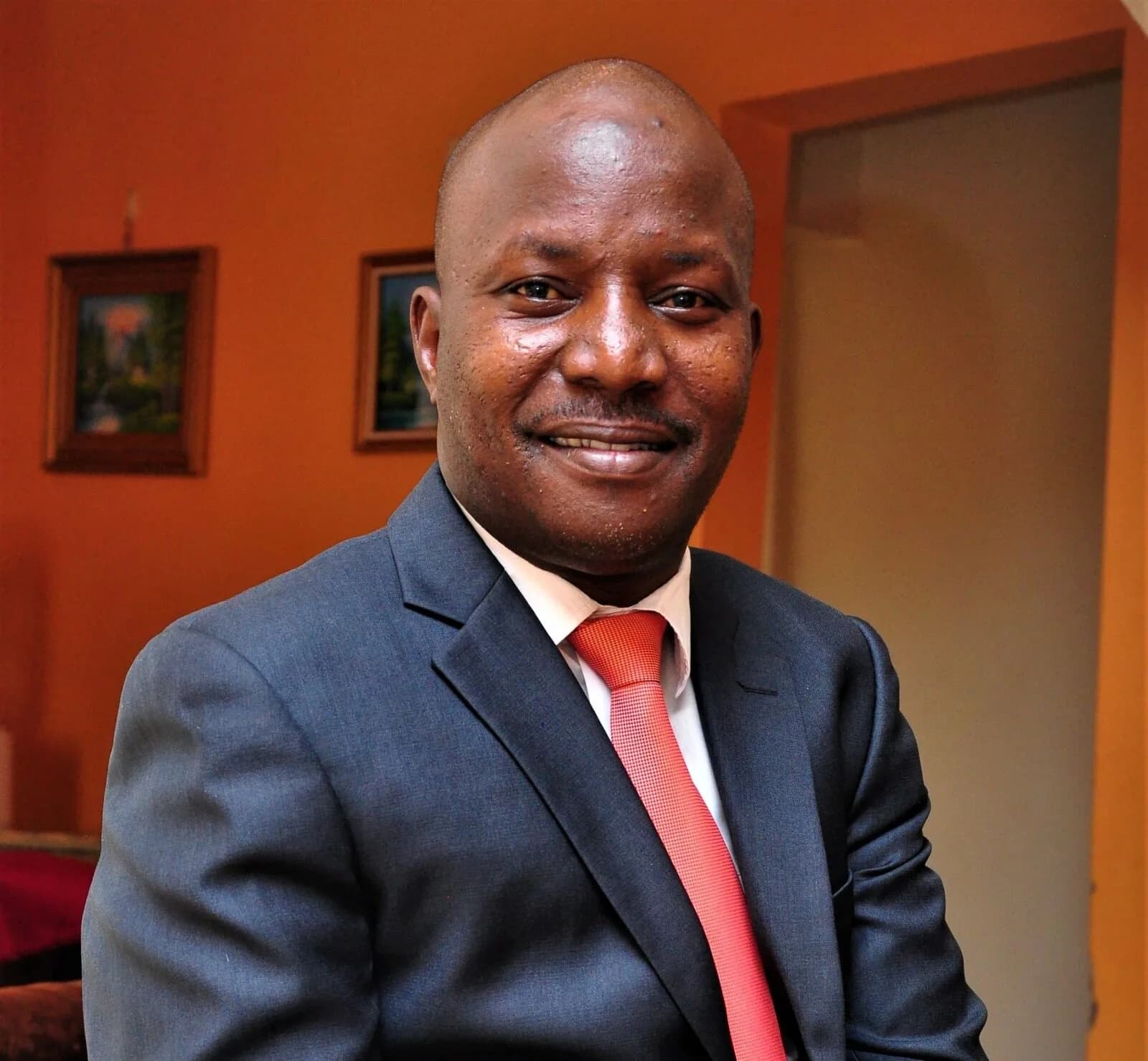
By Robert Mucangi Ndwiga
NAIROBI, Kenya, Sept 26 – Migration is as old as humanity. However, it remains one of Africa’s most misunderstood. From pastoralists crossing borders in search of water and pasture to young Africans pursuing education, employment and opportunities across territorial boundaries, movement has always been part of Africa’s social and economic fabric.
Nonetheless, the way migration is reported by the media can determine whether the public sees migrants as neighbours, contributors and fellow human beings—or as statistics, threats and strangers.
For Kenya, this distinction matters. As a country of origin, transit and destination, Kenya occupies a particularly important position in Africa’s migration narrative. Nairobi is a regional hub for business, diplomacy, humanitarian action and media. Kenya also hosts refugees and asylum seekers, while millions of Kenyans live, work and study outside the country. Migration therefore is not an abstract international issue. It is deeply connected to our families, communities, economy, security and national identity.
This is where journalism and public communication acquire enormous responsibility. Traditional media—newspapers, radio and television—remain powerful agenda setters. Their greatest asset is not necessarily speed, but credibility, editorial discipline and the capacity to place complex issues in context. A well-researched newspaper investigation can expose trafficking networks, interrogate migration policies, document abuses and give visibility to migrants whose voices are otherwise absent from public discourse.
But traditional media also faces a persistent challenge because more often than not, migration is reported when something is negative.
A boat capsizes at sea; migrants die. A border is closed due to an epidemic like Ebola. A refugee camp experiences insecurity. A government announces a crackdown. Such events attract acres of space in the newspapers and airtime, not to mention millions of clickbait stories on social media, but when they become the dominant frame, migration is reduced to a crisis. The ordinary stories of migrants working, paying taxes, studying, building businesses, caring for families and contributing to communities disappear.
This is not an argument for sanitising migration reporting. The media must investigate wrongdoing wherever it occurs. Rather, it is a call for completeness. The public deserves to understand both the risks and the realities of migration.
Digital media has changed the equation dramatically. Today, a smartphone can turn a migrant into a reporter, broadcaster, commentator and storyteller. Social media platforms have democratised the production and distribution of information, allowing migrants themselves to challenge official narratives and tell stories that mainstream media may overlook.
For African migration, this presents enormous possibilities. A Kenyan migrant in the Gulf can document working conditions in real time. A refugee entrepreneur can showcase a business to customers thousands of kilometres away. A diaspora community can mobilise resources during a crisis. A journalist can use data visualisation, podcasts, short-form video and interactive storytelling to explain migration trends to audiences that may never read a traditional newspaper.
Yet the same technologies that democratise storytelling can also industrialise misinformation.Images can be taken out of context. Old videos can be presented as current events. Artificial intelligence can generate convincing but fabricated audio and images. Algorithms can reward outrage rather than accuracy. A dramatic migration claim can travel across thousands of screens before a journalist has verified the first source.
The question facing African media is therefore no longer simply, “How quickly can we report?” It is increasingly, “How responsibly can we verify, contextualise and explain?”
This is particularly important when reporting on refugees and migrants. Language matters. Describing people as “illegal migrants”, for example, can obscure the distinction between a person’s legal status and their humanity. Reporting should be precise about whether someone is an asylum seeker, refugee, migrant worker, irregular migrant or trafficking victim. Precision is not political correctness; it is journalism.
Furthermore, there is another dimension that deserves greater attention: African agency. Too much international reporting about African migration is produced through a lens in which Africans are primarily moving towards Europe, North America or other wealthier regions. But much African migration occurs within Africa.
Kenyans move to Uganda, Tanzania, Rwanda and South Africa. Nigerians move across West Africa. Congolese communities have moved across neighbouring states. Pastoral and trading communities routinely cross borders that are relatively recent constructions in historical terms. The reality is that Africa is not simply exporting migrants. Africans are moving within an interconnected continent.
The African media therefore needs to tell its own migration stories with greater confidence, nuance and evidence. This means investing in specialist migration journalism, training reporters on migration law and policy, using data responsibly, developing relationships with researchers and migration institutions, and—most importantly—putting migrants themselves at the centre of stories about their lives.
Public communicators also have a role. Governments and institutions cannot expect the media to simply reproduce official statements. Communication must provide accessible data, transparent explanations and credible access to experts and affected communities. Equally, journalists must retain their independence and interrogate official claims.
As a postgraduate student of Migration Studies at the University of Nairobi’s Kenya Institute of Migration Studies, and as a public communication professional, I have increasingly come to see migration as both a policy issue and a storytelling challenge. The quality of public debate depends partly on the quality of the stories we tell.
Kenya stands at an important moment. Our migration landscape is changing alongside technology, demographics, climate pressures, regional integration and new forms of work. The media must change with it.
The future of migration reporting will not belong exclusively to newspapers, television stations, radio or social media creators. It will belong to those who can combine the strongest traditions of journalism—verification, independence, context and accountability—with the possibilities of digital and emerging technologies.
The time is now for journalists to publicise stories that investigate without dehumanising. Stories that question without stereotyping. Stories that recognise vulnerability without erasing agency. And stories that understand that behind every migration statistic is a human being making choices, facing constraints, pursuing opportunity—or simply trying to find a place to call home.


Comments
No comments yet. Be the first to share your thoughts.