
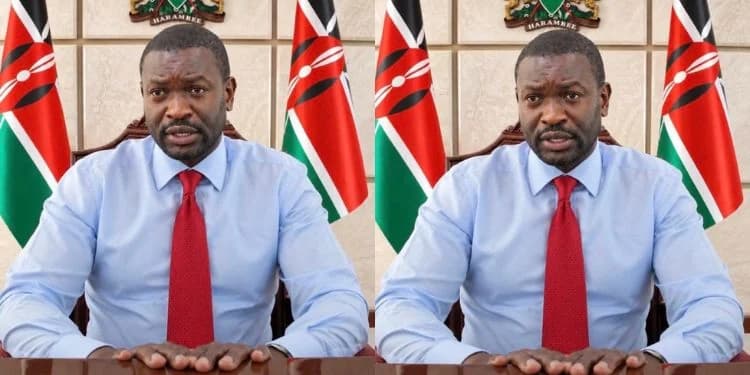
Edwin Sifuna Watenya’s political career has taken him from legal practice and unsuccessful electoral contests to the leadership of the Orange Democratic Movement (ODM), a public dispute over the party’s political direction and a presidential bid outside the party.
His first attempt to become Nairobi senator ended in defeat in 2017, but his appointment as ODM secretary-general the following year gave him a national platform.
He later won the Nairobi Senate seat in 2022, combining his parliamentary role with his responsibilities as one of the party’s most visible officials.
That position became increasingly difficult to sustain in 2026, when disagreements over ODM’s cooperation with the United Democratic Alliance (UDA) turned into a leadership dispute. The party removed him as secretary-general following disciplinary proceedings, while Sifuna challenged the process through the Political Parties Disputes Tribunal.
After losing his senior party position, Sifuna began pursuing a separate political platform for the 2027 General Election. He was unveiled as the preferred presidential candidate of The Equitable Party (TEP) on October 4, 2026.
The party later changed its name to the Linda Mwananchi Movement (LMM), aligning its formal identity with the political movement associated with his supporters.
Edwin Sifuna at a Glance
- Full name: Edwin Sifuna Watenya
- Birthplace: Kakamega County, Kenya
- Date of birth: May 22, 1982
- Profession: Lawyer and politician
- Primary education: Kakamega Township Primary School, 1988–1995
- Secondary education: Musingu High School, 1996–1999
- Legal education: Bachelor of Laws at the University of Nairobi and a postgraduate diploma from the Kenya School of Law
- Admission to legal practice: 2008, according to his personal biography
- Legal career: Founder and managing partner of E. Sifuna & Associates Advocates, according to his biography
- Former party position: Orange Democratic Movement (ODM) Secretary-General, appointed in 2018
- Senate seat: Elected Nairobi Senator in 2022
- New political vehicle: The Equitable Party (TEP), unveiled in October 2026
- 2027 ambition: Announced as TEP’s presidential candidate at the party’s launch on October 4, 2026.
Early Life, Education and Legal Training
Edwin Sifuna was born on May 22, 1982, in Kakamega County. His personal biography describes his family as working-class, with his father serving as a civil servant at the defunct municipal council and his mother working as a teacher before retirement.
He attended Kakamega Township Primary School before proceeding to Musingu High School. He later studied law at the University of Nairobi and completed professional training at the Kenya School of Law.
Parliamentary records list his primary education from 1988 to 1995, secondary education from 1996 to 1999, and university studies from 2001 to 2005.
His personal biography gives 2006 as the year he graduated with a Bachelor of Laws degree. The difference in the university dates should be checked against the original academic records before publication.
After completing his legal training, Sifuna undertook pupillage at Kairu and McCourt Advocates and was admitted to the Roll of Advocates in 2008.
His legal background later became a prominent feature of his public identity, particularly in debates involving constitutionalism, accountability and the conduct of public institutions.
Before becoming a full-time political figure, he worked in legal and administrative roles in the private sector. His biography lists Magnate Ventures, where he served as legal affairs manager, and the Mini Group of Companies, where he worked in legal and administrative roles. He later established E. Sifuna and Associates.
Sifuna also became involved in legal-sector reform and public-interest work. His biography identifies him with OkoaLSK, an initiative associated with reform within the Law Society of Kenya, and lists his involvement in public-interest, legal-aid and human-rights work. He has also said he was part of the legal team representing doctors during the 2017 doctors’ strike.
These experiences provided a professional foundation before his rise within ODM. His political involvement included serving on the Coalition for Reforms and Democracy (CORD) technical and advisory committee from 2013 to 2016, followed by involvement in the National Super Alliance (NASA) from 2016 to 2021.
The 2017 Setbacks in Kanduyi and Nairobi
Sifuna’s path to elective office was not immediate. In 2017, he sought the ODM nomination for the Kanduyi parliamentary seat in Bungoma County but did not secure the party ticket.
John Makali emerged as the nominee, ending Sifuna’s attempt to contest the constituency seat under the ODM banner.
He subsequently turned his attention to Nairobi, where he contested the Senate seat in the August 2017 General Election.
The race was won by Johnson Sakaja, who was then associated with the Jubilee Party. Sifuna finished second, losing his first attempt to become Nairobi senator.
Sakaja won with 811,826 votes (51.20%), while Sifuna received 674,056 votes (42.51%), according to contemporaneous biographical reporting.
The twin setbacks denied Sifuna an elective position in 2017, but he remained active in party politics. His legal background, involvement in opposition coalitions and continued work within ODM gave him another route into national political leadership.
In February 2018, he became ODM secretary-general. The appointment put him among the officials responsible for communicating the party’s decisions, representing its organisational position, and coordinating its public messaging.
How Sifuna Rose Through ODM
Edwin Sifuna served as ODM secretary-general from 2018 until the dispute over his removal in 2026. The position gave him a central role in the party’s public communication and internal organisation, working alongside senior officials and party leader Raila Odinga.
As secretary-general, he regularly addressed political developments, defended ODM’s positions, and responded to criticism of its leadership. His legal training also influenced the language he used in public arguments, particularly when discussing constitutional requirements, electoral processes and the conduct of political institutions.
The position placed him within a party whose identity had been shaped by opposition politics and campaigns for constitutional reform. ODM’s political direction, however, evolved as it entered new arrangements with other political formations and negotiated its place within the national government.
Edwin Sifuna became one of the party’s most recognisable spokespeople. His visibility brought influence, but it also tied his public profile to decisions made by the leadership, including choices that later exposed differences within ODM.
For several years, the secretary-general’s office provided him with a platform to shape public debate on the party’s behalf. By 2026, disagreements over the party’s relationship with the government had turned that position into the centre of a leadership dispute.
The 2022 Senate Victory
Five years after losing the Nairobi Senate contest, Sifuna returned to the race in the 2022 General Election and won the seat.
He defeated United Democratic Alliance candidate Margaret Wanjiru, securing 716,876 votes to her 524,091, according to IEBC figures.
The victory gave Sifuna an elected mandate and moved him from party administration into a legislative role.
As Nairobi senator, he was expected to represent the county’s interests in the Senate, participate in legislation and oversight, and contribute to national discussions affecting county governments.
His parliamentary responsibilities differed from those of the ODM secretary-general. As a party official, he spent much of his public work explaining and defending ODM’s positions.
As Nairobi senator, Sifuna’s constitutional responsibilities included:
- Represented Nairobi County’s interests in the Senate.
- Participated in parliamentary debates and legislative processes.
- Scrutinised issues affecting county governments and public institutions.
- Contributed to oversight of public services and government operations.
His public interventions have included questions about public health facilities, university accommodation costs, staffing at Kenya’s diplomatic missions and evictions in Nairobi. These matters reflected the range of issues brought before the Senate, from public services and institutional accountability to urban governance.
Sifuna’s national profile remained shaped by his position within ODM. His role in the party meant people often interpreted his statements in the context of its relationship with the government and the wider opposition.
That connection became more complicated as ODM’s leadership considered how to engage with the administration of President William Ruto.
The Senate victory gave Sifuna an independent electoral mandate while his position as secretary-general kept him closely involved in party strategy. Those responsibilities eventually intersected when his views on ODM’s political cooperation clashed with the direction taken by parts of its leadership.
ODM-UDA Disagreement
The central dispute between Sifuna and sections of ODM’s leadership concerned the party’s relationship with UDA and the broad-based government arrangement.
While senior figures supported cooperation with the administration, Sifuna publicly questioned whether the arrangement preserved ODM’s independence and political identity.
His objections included the argument that the broad-based arrangement should not be treated as a substitute for a clearly defined governing agreement.
He also argued that the parties needed to honour commitments made under their memorandum of understanding.
The disagreement raised a broader question about ODM’s role. Should the party work with the government while retaining a distinct opposition identity, or deepen its cooperation in a way that altered how it presented itself to supporters?
Sifuna’s position put him at odds with officials who defended the arrangement. ODM figures, including Junet Mohamed and Peter Kaluma, criticised aspects of his stance, while other leaders maintained that cooperation with the government was a legitimate political choice.
For Sifuna, the issue tied to ODM’s identity and the promises it made to its supporters. For those backing the arrangement, cooperation was a way to influence government policy and advance the party’s interests. The disagreement exposed competing views within ODM over its strategy and future direction.
The conflict eventually moved from political debate to a formal disciplinary dispute. Sifuna’s critics treated his public position as incompatible with the direction endorsed by the party, while he challenged the process used against him and maintained that internal decisions had to comply with ODM’s constitution and the law.
The Removal Dispute and Tribunal Rulings
In February 2026, ODM moved to remove Sifuna as secretary-general. He challenged the decision through the party-dispute process, arguing that the procedure had not given him a fair hearing.
The first stage of the dispute did not produce a final ruling on the substance of the removal.
In March, the Political Parties Disputes Tribunal struck out an earlier petition on jurisdictional grounds and directed that the relevant internal dispute-resolution process be pursued. ODM had also argued that Sifuna approached the tribunal before exhausting the party’s internal mechanisms.
On June 18, 2026, the tribunal ruled that the initial removal had denied Sifuna a fair hearing. It nullified that decision but did not prevent ODM from initiating fresh disciplinary proceedings in accordance with the party constitution and the law.
The ruling concerned the fairness of the first process rather than permanently barring the party from taking disciplinary action.
ODM subsequently pursued a fresh process. On June 22, the party’s National Executive Committee adopted a disciplinary panel’s recommendation to remove Sifuna as secretary-general. The Office of the Registrar of Political Parties later ratified the decision in a letter dated July 9, according to reports published at the time.
Sifuna also challenged the second removal. On September 10, the tribunal dismissed his challenge and upheld the new disciplinary process. The ruling found that ODM’s National Executive Committee could establish a special panel and that Sifuna had been given an opportunity to respond during the later proceedings.
The two decisions differed because they addressed separate disciplinary processes. The tribunal nullified the first removal because it denied a fair hearing.
ODM then conducted a new process, which resulted in another removal. The tribunal subsequently upheld that later process, allowing the party’s decision to stand.
The dispute also affected Sifuna’s parliamentary position. On July 16, 2026, Senate Speaker Amason Kingi announced that he was removed as Senate Deputy Minority Whip and replaced by Eddy Oketch.
The move affected his position within the Senate’s minority leadership but did not remove him from his elected office as Nairobi senator.
By the time the tribunal upheld the fresh disciplinary process, Sifuna had lost his senior position in ODM and his deputy whip role. He retained his Senate mandate but no longer held the party office that had made him one of its most visible national officials.
Public Controversies and Political Criticism
Sifuna’s public profile has also been shaped by episodes that attracted criticism or debate. These incidents have highlighted the challenges facing a politician known for direct public statements and now seeking support beyond his established party base.
At the funeral of former Cabinet minister Cyrus Jirongo in December 2025, Sifuna apologised to former President Uhuru Kenyatta on behalf of ODM members who had insulted him. His use of the term “washenzi” to describe those who had made the insults drew attention. The episode became part of the wider discussion about his communication style and his handling of past political hostilities.
In July 2026, a comparison he made involving chicken and the Affordable Housing Programme sparked criticism on social media. The reaction showed how his comments could generate debate beyond the immediate policy issue he intended to address.
Images from his home in Bungoma also prompted online commentary in July 2026. The images generated discussion about his personal circumstances, but commentary about a politician’s home is not, by itself, evidence of wrongdoing. Any claims of misconduct would require separate, credible evidence.
Another point of political scrutiny followed his October 2026 meeting with former Deputy President Rigathi Gachagua at Wamunyoro.
Critics, including Makau Mutua, questioned the optics of the engagement given Sifuna’s earlier criticism of Gachagua. The episode raised questions about how Sifuna might approach alliances with leaders whose political records and positions differ from his own.
The Equitable Party and the Presidential Bid
After leaving ODM’s senior leadership, Edwin Sifuna began building a formal platform for his 2027 presidential ambitions.
The Linda Mwananchi Movement had become associated with his political mobilisation and the argument that public leadership should respond more directly to the concerns of ordinary Kenyans.
The movement’s messaging focused on the cost of living, employment opportunities for young people, taxation, public accountability and access to essential services.
However, a movement with a recognisable name and public following is not automatically an electoral vehicle. A presidential campaign also requires a political party structure that meets the legal and administrative requirements for participation in an election.
The need for a formal platform grew more urgent as preparations for the 2027 General Election accelerated. The registration process for a new party and the party administration timetable created practical challenges for Sifuna’s camp. An existing party offered a way to establish a formal electoral vehicle while pursuing the movement’s preferred identity.
On October 4, 2026, Sifuna was unveiled as The Equitable Party’s preferred presidential candidate at an event in Nairobi. The party’s then-leader, Gilbert Marava, announced that the leadership would be restructured to accommodate Sifuna and his supporters. Marava said Sifuna would take over as party leader and seek the presidency under its ticket.
The launch gave Sifuna a formal party platform and marked a break from the ODM structure, where he had served as secretary-general since 2018. It did not, however, mean that the Linda Mwananchi identity had been abandoned.
During the launch, Edwin Sifuna said the party would be renamed in line with a resolution by the movement’s principals. He said the party would pursue the name change in the days that followed, while leaving open the possibility of retaining TEP if the proposed rebranding hit further obstacles.
The arrangement addressed two separate needs. TEP provided an existing party structure for the electoral timetable, while Linda Mwananchi remained the identity around which Sifuna’s political supporters had been mobilising. The next step was to bring the formal party name into line with the movement without jeopardising preparations for the election.
How TEP Transitioned to Linda Mwananchi Movement
The transition from The Equitable Party to the Linda Mwananchi Movement followed the plan announced at the October 4 launch. Rather than treating TEP as a permanent political identity, Sifuna’s camp aligned the registered party with the movement that had become central to his mobilisation.
On October 8, TEP’s National Executive Council approved the proposed rebranding. The party then submitted the required documentation to the Office of the Registrar of Political Parties, including its resolution authorising the name change and other supporting records. The process also involved public notice and the statutory procedure for considering representations or objections.
The Registrar began the formal process of changing the party’s name, but the initial announcement of the proposed change was not itself confirmation that all the legal steps had been completed. The party had to follow the applicable procedure before adopting the new name.
By October 17, Edwin Sifuna was publicly telling supporters to embrace Linda Mwananchi rather than continue using the TEP identity. On October 20, The Sifuna reported that the party had transitioned to the Linda Mwananchi Movement name after no objections were raised during the period provided for representations.
The sequence was clear: Sifuna first unveiled TEP on October 4 as an existing political vehicle, then rebranded it, and later transitioned it into the Linda Mwananchi Movement. TEP was the initial formal platform, while LMM became the identity under which the political project was organised.
This transition brought the party’s formal identity closer to the movement’s public messaging. Instead of developing two separate brands, Sifuna’s team sought to use the existing party structure to consolidate the supporters, leaders and political agenda associated with Linda Mwananchi.
The name change alone did not resolve the wider challenges facing the campaign. The movement still needed to develop its structures, organise potential candidates, build support in different regions and prepare for the legal and political requirements of the 2027 election. The rebranding established a clearer identity, but it did not determine whether Sifuna would secure the backing of a wider opposition alliance.
Policy Agenda Behind His 2027 Ambitions
In outlining his presidential ambitions, Edwin Sifuna has placed economic opportunity, accountability, constitutionalism and reducing government waste among his stated priorities.
He has spoken about the pressure on households and businesses, the burden of taxation, youth employment and the need for stronger oversight of public expenditure.
These themes outline the agenda he wants to present to voters. They also connect to his criticism of the government and his argument that public leadership should be assessed not only by development projects but also by compliance with the Constitution, transparency, and management of public resources.
On the economy, Sifuna has raised the need to review government spending and ease pressure on households. He has said the campaign would examine expenditure and taxes affecting essential goods and services and develop detailed proposals through its policy work.
On education, he has called for better data on learners, schools and teachers to strengthen oversight and limit opportunities to misuse public funds. On healthcare, he has proposed settling legitimate hospital claims on time and taking stronger action against fraudulent claims.
Follow our WhatsApp Channel and X Account for real-time news updates.

Comments
No comments yet. Be the first to share your thoughts.