
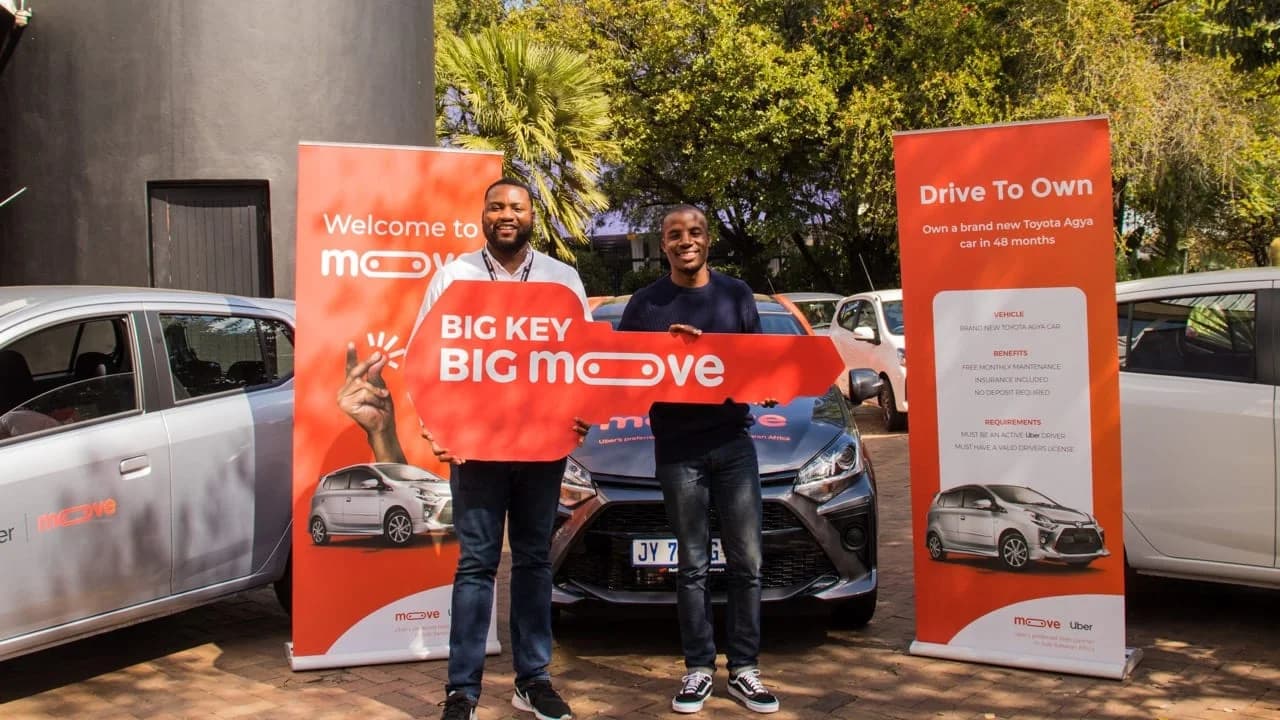
Moove, the Uber-backed company that finances vehicles for drivers, is ending its Nigerian operations on 8th October 2026, just over a month after Uber left the country. The company says eligible customers will keep the vehicles they currently operate and receive full ownership, with no further payment to Moove for the vehicles themselves.
Moove values those vehicles at approximately NGN 35 billion. Its ownership transfer took effect on 1st October 2026, a week before today’s announcement, under an initiative it calls “Thank You Nigeria”. The company also says it will give staff members a free car.
For a driver still paying towards ownership, the promise removes the remaining vehicle payments. The wording is narrower than a promise to cancel every charge on an account, however, and eligibility remains an important condition.
Founded in Lagos in 2020 by Ladi Delano and Jide Odunsi, Moove began with a financing problem: people wanted to earn a living driving, but could not afford the vehicle or obtain the credit to buy one.
Its Drive-to-Own model lets drivers use a financed vehicle to earn money while making payments towards eventual ownership. Moove has also had rental products in Nigeria. Renting a car and paying towards owning it leave a driver with different rights when an agreement ends. Today’s announcement covers eligible vehicles without setting out which customers qualify under each product.
On Moove’s own count, more than 9,000 customers have used its Nigerian Drive-to-Own and rental products. Their work generated approximately NGN 57 billion in revenue through Moove-financed vehicles, or about KES 5.561 billion. That is customer revenue, not a figure for Moove’s own profit or the money drivers kept after expenses.
“More than 9,000 customers have used our Drive-to-Own and rental products in Nigeria. Their work generated approximately ₦57 billion in revenue through Moove-financed vehicles,” Delano, Moove’s co-founder, co-CEO and advisory board chairman, said in the statement.
Moove says it will work directly with affected customers and employees to complete the transfers. The announcement does not give a deadline for ownership paperwork or explain who pays transfer costs. It also does not specify how outstanding charges unrelated to the vehicle purchase will be treated, or give the terms of employee severance.
Uber stopped Nigerian operations on 2nd September 2026 after 12 years. Last month, we covered its departure from Nigeria and Uganda. For drivers using Moove-financed vehicles on Uber, that removed a platform through which they earned money to make repayments.
The two companies also have an investment relationship. Uber invested in Moove’s March 2024 funding round. The timing of the exits makes their commercial relationship relevant, although Moove’s closure announcement does not establish that Uber’s departure was the sole reason for its decision.
Moove’s global business continues. The company says it now has approximately 42,000 vehicles across 29 cities, figures it also published in its August 2026 funding announcement. It is expanding into managing autonomous vehicles with Waymo, the driverless taxi company owned by Google’s parent, Alphabet. That work includes owning fleets and running depots where vehicles are charged and serviced.
We covered Moove’s arrival in Nairobi in December 2021, when it announced partnerships with Uber and logistics companies Sendy and Lori Systems. Today’s vehicle transfer promise concerns Nigeria; it announces no equivalent arrangement for Kenyan customers.
For eligible Nigerian drivers, owning the car without further vehicle payments should reduce the amount they need to earn to keep working. Fuel and maintenance still cost money, and ownership alone does not replace Uber bookings. The immediate task is getting written confirmation of eligibility, the remaining account balance and the date the vehicle’s ownership documents will change hands.

Comments
No comments yet. Be the first to share your thoughts.