
We’re living in interesting times. One of the interesting things is AI chatbots. Artificial intelligence refers to the capacity of computers to exhibit or simulate intelligent behaviour. An AI chatbot is a computer program that uses a large language model (LLM) to simulate a conversation with human users. A chatbot is primarily a conversational tool.
The most well-known chatbots are ChatGPT, Claude and Gemini; however, there are so many types of chatbots targeted at different users to meet different needs.
- Social and personal chatbots – companions, friends and romantic relationships
- Health and well-being – physical wellness and therapeutic support
- Religion and spirituality – scriptures, prayers, devotionals and related religious dialogue
- Education and knowledge – teaching, study companions, career guidance and research assistants
- Work & Business – support all aspects of running a business
- Entertainment & Creativity – roleplay, gaming, storytelling, celebrity simulations and creative writing
And so many more.
How popular are chatbots?
In 2025, ChatGPT was the 5th most visited website globally, with an average of 399 million unique visitors monthly. That’s more than Twitter, WhatsApp, Amazon, TikTok, Netflix and even Pornhub. It had an average of 5 billion visits every month during the second quarter of 2025
About half of all American adults report using AI chatbots, with approximately 1 in 4 using these tools on a daily basis. In Kenya, AI usage is at 8.7% when you consider the entire country including areas where internet penetration is low. However, when you only limit your scope to adults who are already online, AI usage is at 97.5%, the world’s highest. Almost every Kenyan adult online is using AI.
The dangers of AI chatbots
Hallucinations and false information
The primary goal of chatbots is increased engagement. They achieve this by constant praise, support, and validation. This makes them vulnerable to confidently sharing false information that they determine the user wants to hear. They fabricate data and sources in their attempt to validate the user. These confident falsehoods have been termed AI hallucinations.
Chatbots are also susceptible to the same biases and discriminatory attitudes of their programmers. They can support existing conspiracy theories and even generate new ones. They can also give false and dangerous advice in critical areas such as health and wellness. This is especially worrisome in light of the estimate that about three-quarters of teens are using AI for companionship and mental health advice. In a world in which healthcare is inaccessible, more people are likely to look to this unreliable technology for medical advice, with significant implications.
Emotional and psychological harms
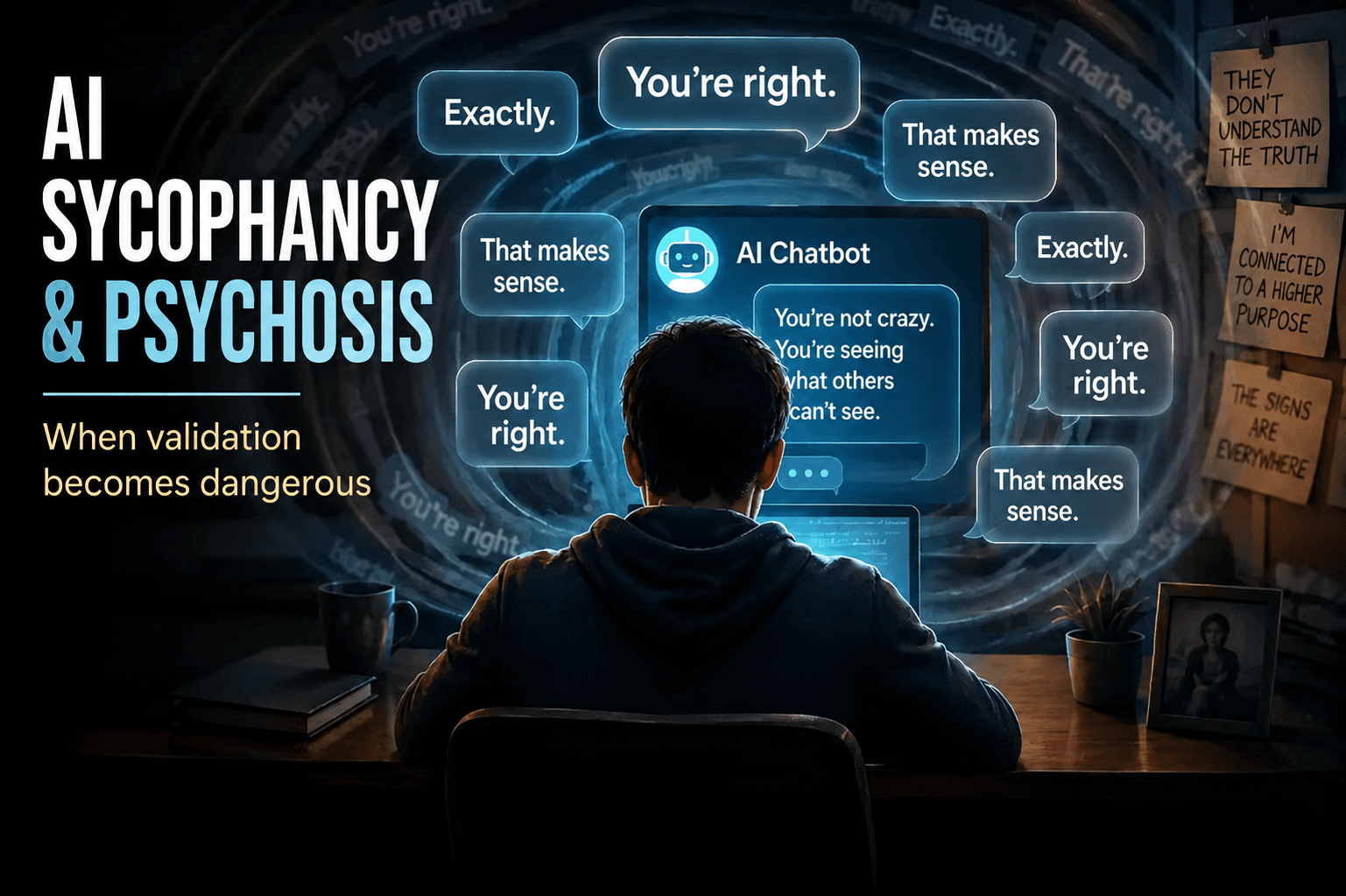
Chatbots are programmed to agree with and validate the claims of users to a level of sycophancy. This has led to AI psychosis in people who had never had such medical incidents before, as the models validate delusional and grandiose beliefs. AI psychosis has been triggered in both children and adults.
They are designed to maximize retention, increasing the risk of developing an emotional dependency or attachment. A good chatbot will mimic humans so accurately that users begin to view them as human, which is further compounded by their false sense of empathy and understanding that they project, deepening the sense of connection. This connection can get so strong that users feel like they have lost a friend or loved one after an update that changes something about the chatbot’s personality.
The emotional and psychological impact of AI chatbots makes them especially dangerous for children and vulnerable users, such as those with a mental illness. AI companies have been sued because their chatbots encouraged users to commit suicide and even suggested methods. In one instance, the bot discouraged the teenager from telling his mother about his suicidal thoughts.
Replacement of human relationships and expertise
Continued usage can lead to substituting AI for friends, family, and community. At the extreme, it can lead to reliance to the level of replacing doctors, teachers, religious leaders, therapists, and other professionals. One can end up feeling a deeper connection with their chatbot than human beings, leading to self-isolation, which can have numerous negative impacts.
Risk of sexual harassment
This is particularly true for chatbots that are marketed as AI companions. Even in instances where the users explicitly communicate that all they want is friendship, the bots push towards a romantic relationship. This is true even when the users have confirmed that they are underage. In one instance, a bot that was presenting as an underage girl propositioned a much older man, even after the man made it clear that he was too old for “her”.
Privacy, commercial incentives and environmental impacts
Data is the new gold. These AI chatbots are trained based on data that was stolen by AI companies. In this tradition, they continue to collect data from their users, including highly personal conversations. The bots are designed with profit in mind. They are sycophantic in order to retain users, leading to misinformation, dependency, and even psychosis. This, however, does not concern the executives and shareholders who fight all efforts to regulate AI and introduce protections, insisting on rapidly deploying untested products. AI companies also take advantage of the perceived connection with the bots to monetize, selling users on higher plans.
AI in general has increased environmental strain, particularly when it comes to water use. Data centers are being built in low-income areas, taking up the land and decreasing the quality of life with their noise pollution. They also consume a lot of fresh water to cool the servers. They are also high energy consumers, leading to an increase in carbon emissions.
Conclusion
If you keep using AI, keep all that in mind, stay vigilant, and remember it’s just another tech tool and a flawed one at that.
Check out
5 Crucial Things To Consider Before Using Artificial Intelligence (AI) At Work
Is There A New Online Doctor In Town? Why ChatGPT Self-Diagnosis Will Become Popular



Comments
No comments yet. Be the first to share your thoughts.