
The European Union (EU) told the United Nations (UN) Security Council (UNSC) that the war in Ukraine can end immediately if Russia withdraws its forces and stops its attacks, placing full responsibility for the conflict on Moscow during an annual debate on EU‑UN cooperation in New York.
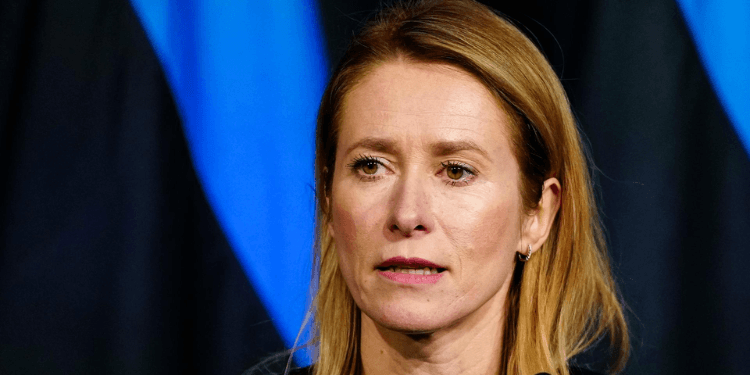
Addressing the Security Council on April 13, EU High Representative for Foreign Affairs and Security Policy Kaja Kallas said Russia’s full‑scale invasion of Ukraine remains a clear violation of the UN Charter and international law.
She said the fighting has continued for more than three years because Russia has chosen not to end it, despite having the ability to do so at any time by pulling out its troops.
“How the world responds to this moment says less about the new emerging order than it does about us. Because we have been here before. Just like the current international order, the European Union is plagued by imperfection. But that does not mean we stop trying to do better,” stated Kaja Kallas.
EU Blames Russia for Prolonged War
Kallas said Russia’s actions include attacks on civilians, destruction of infrastructure, disinformation campaigns, and denial of responsibility for war crimes.
She reminded the Council that Russia recently used its veto to block support for Ukraine’s territorial integrity, undermining the Security Council’s role in maintaining international peace and security.
“Russia is also supporting Iran with intelligence and drones. Prolonging the war benefits Russia through higher energy prices, depleted air defense arsenals, and diverted attention,” read part of the statement by Kallas.
She said that Ukraine is a sovereign UN member state with a population of about 40 million people and has been defending its independence since the invasion began.
Kallas rejected claims that the war is a regional or proxy conflict, saying its consequences extend far beyond Europe, disrupting global food and energy markets.
The EU reaffirmed its support for Ukraine’s right to self-defense under the UN Charter and said it backs a just and lasting peace grounded in respect for Ukraine’s sovereignty and internationally recognized borders.
Kallas said the EU supports efforts at the General Assembly to call for peace in line with the Charter and has backed resolutions promoted by Ukraine.
The speech also raised concerns about other countries’ support for Russia’s war effort.
Kallas said North Korea’s transfer of weapons and the reported presence of troops supporting Russia violate UN Security Council resolutions.
She also said that Iran’s military assistance to Russia, including the supply of ballistic missiles, poses a serious threat to international security.
Broader EU-UN Cooperation
Beyond Ukraine, Kallas discussed the EU’s broader cooperation with the United Nations on peace and security.
She said the EU remains a leading supporter of UN-led peace efforts and humanitarian work worldwide, including in Gaza, Sudan, Syria, Somalia, Haiti, Myanmar, and the Democratic Republic of Congo.
On Gaza, she said the ceasefire remained fragile and stressed that humanitarian aid must not be politicized or blocked.
She said the EU is the largest humanitarian donor to Palestinians in Gaza and the West Bank and continues to support the two-state solution as the only viable path to lasting peace in the Middle East.
On Syria, Kallas said recent developments created an opportunity for a Syrian-led political transition but warned that violence and abuses showed how fragile the situation remains.
She said the EU supports accountability for crimes, the protection of civilians, and respect for Syria’s unity and territorial integrity.
Kallas also outlined the EU’s role as a security provider, noting that EU member states contribute more than a fifth of the UN peacekeeping budget.
She highlighted EU missions operating alongside or under UN mandates, including maritime operations in the Red Sea and the Horn of Africa, and peace support missions in the Balkans and Libya.
She said the EU and its member states are the largest financial contributors to the UN system.
According to the EU, its members provide about 42 percent of global official development assistance, finance about a quarter of the UN’s regular budget, and contribute roughly a third of funding to UN agencies, funds, and programs.



Comments
No comments yet. Be the first to share your thoughts.