
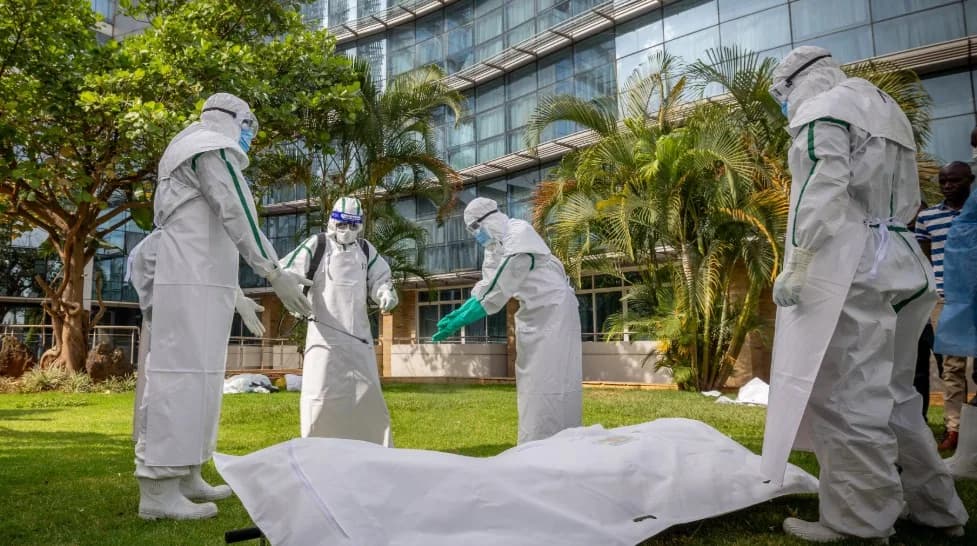
Madagascar imposes 21-day quarantine on travellers from Kenya over Ebola fears

The new measures bar most foreign nationals who have visited Kenya, Nigeria or the DRC within 21 days, while exempt travellers must undergo mandatory quarantine and health monitoring.
Madagascar has introduced new travel restrictions targeting passengers from Kenya and two other African countries, with some travellers required to undergo a mandatory 21-day quarantine as authorities step up efforts to prevent the spread of Ebola.
The restrictions, which took effect on November 1, 2026, also apply to foreign nationals who have travelled through Nigeria or the Democratic Republic of Congo (DRC) within the 21 days preceding their arrival in Madagascar.
Under the new measures, foreign nationals who have visited or transited through any of the three countries during the specified period will be temporarily denied entry into Madagascar.
However, Malagasy citizens, foreign residents holding valid work or student visas, and authorised diplomats are exempt from the entry ban. The exemption also covers expatriate staff working for international organisations and non-governmental organisations (NGOs).
Despite being allowed into the country, these categories of travellers must undergo a compulsory 21-day quarantine and health monitoring.
According to an official public health notice, the requirement applies to Malagasy nationals and other authorised travellers who have been in the affected countries.
Latest Stories
- Rironi-Mau Summit Road sparks political storm over billions in public spending and secret contracts
- 𝐄𝐚𝐬𝐭𝐥𝐞𝐢𝐠𝐡 𝐕𝐨𝐢𝐜𝐞 𝐚𝐭 𝐍𝐢𝐧𝐞 - Homa Bay women leaders condemn targeted attacks on female aspirants
- SUPKEM warns Coast politicians against dragging spouses and families into political feuds
- Goons, police top list of perpetrators in attacks against Kenyan journalists as violations more than double
“Malagasy nationals, foreign nationals residing in the country and holding a valid work or student visa, as well as any person(s) authorised to enter the country from these countries, are subject to a mandatory 21-day quarantine with health monitoring, in accordance with applicable procedures,” the notice stated.
Kenya Airways has also cautioned passengers travelling to Madagascar to familiarise themselves with the new requirements before departure.
In its travel advisory, the airline stated: “Kenya Airways customers travelling to Madagascar from 1st November 2026 are advised to take note of the public health measures and travel restrictions put in place by the government of Madagascar for anyone who has been to/transited through Kenya, Nigeria, and the Democratic Republic of Congo.”
Affected passengers will also be required to cover the costs of their quarantine, including accommodation, meals and transport to designated health facilities.
Madagascar joins a growing list of countries that have introduced travel restrictions linked to concerns over the Ebola outbreak in Kenya.
Saudi Arabia announced similar measures on October 30, 2026, suspending travel by its citizens to Kenya and halting the issuance of all visa categories to Kenyan travellers.
The country also barred entry to passengers arriving directly from Kenya or those who had visited the country within the preceding 21 days, including travellers who had transited through other countries.
El Salvador has also restricted entry for passengers arriving from or transiting through Kenya under Official Letter No. 2026-6000-055. The restrictions extend to several other African countries, including Angola, Burundi, Ethiopia, Rwanda, Uganda and the DRC.
In Israel, the Ministry of Health urged immigration authorities to consider a temporary entry ban on non-citizens who had visited Kenya, Uganda, Rwanda, South Sudan or the DRC within the previous 21 days. The proposal, however, was a recommendation rather than an immediate blanket ban.
Meanwhile, Health Cabinet Secretary Aden Duale has defended Kenya's handling of the Ebola outbreak, questioning the justification for some of the international travel restrictions imposed on Kenyan passengers.
In a statement issued on October 31, 2026, Duale argued that some of the measures were excessive, considering the progress health authorities had reported in containing the outbreak.
“We reiterate that the measures taken are not only excessive but not backed by the current epidemiological situation in the country,” he said.
The Cabinet Secretary said health authorities had traced all 135 people identified as contacts of the imported index case, representing 100 per cent of the known contacts. Of these, 118 had been placed under active quarantine.
He added that all eight confirmed cases were linked to the initial case, involving four healthcare workers and four close family members.
According to Duale, no community transmission had been detected outside the identified cluster.
The Ministry of Health also reported that Kenya had not recorded a new Ebola case since October 19, 2026. However, the outbreak had claimed two lives, including that of the initial patient.


Comments
No comments yet. Be the first to share your thoughts.