
Farmers struggling with rising animal feed costs are increasingly looking for ways to cut production expenses without compromising the nutrition of their livestock and poultry.
One option gaining attention is hydroponic fodder production, a method that allows farmers to grow fresh, nutritious animal feed without soil and within a relatively short period.
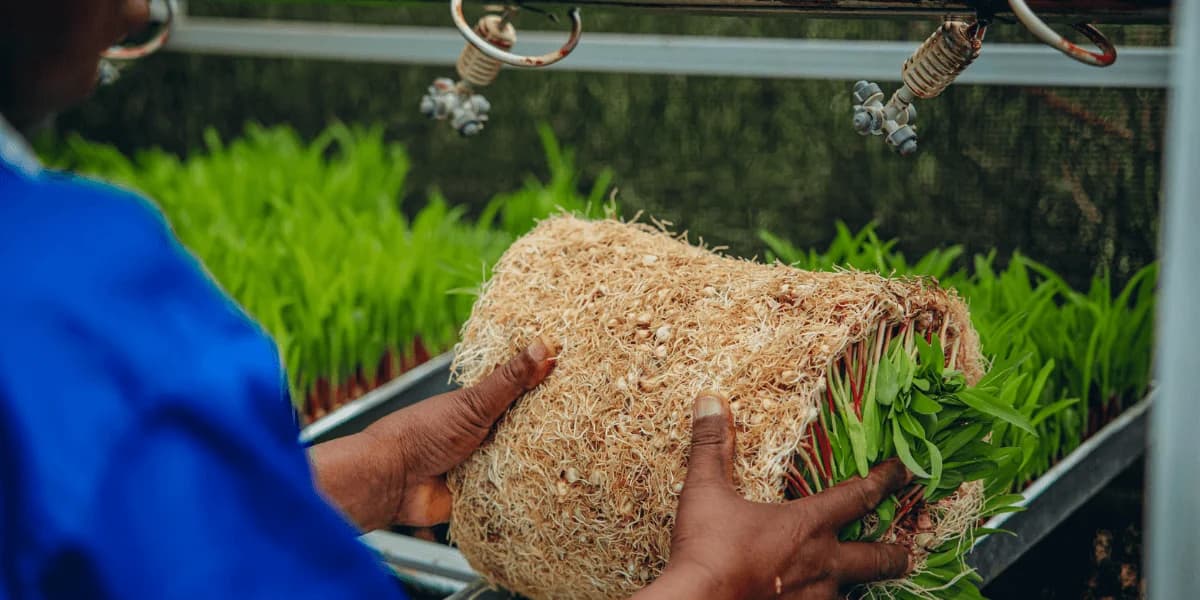
Hydroponic fodder is produced by germinating grains and allowing them to grow for about seven to nine days under controlled conditions. By the end of the process, the farmer obtains a mat of green sprouts, roots and leaves measuring about six to eight inches. The entire mat can be fed to animals, meaning little or no feed is wasted.
The method can be particularly useful during dry periods when pasture and other sources of fresh green fodder become scarce. It can also be practised in small spaces, including near livestock sheds and poultry houses, making it suitable for farmers with limited land.
One of the main advantages of hydroponic fodder is its nutritional value. The young plants are rich in protein, energy, vitamins, beta-carotene, trace elements, enzymes and other compounds important for animal growth and health. Its high digestibility can also support better feed utilisation and animal weight gain.
For farmers, the short production cycle is another major attraction. While conventional fodder crops may take several weeks or even months to mature, hydroponic fodder can be ready for feeding in seven to nine days. With proper planning, farmers can therefore establish a continuous production cycle and have fresh fodder available throughout the year.
The system also uses considerably less water than conventional fodder production. About three to four litres of water can be used to produce a kilogramme of hydroponic fodder, making the practice particularly attractive in areas where water is limited.
Production does not necessarily require expensive infrastructure. Farmers can use simple structures and trays made from locally available materials to establish a small fodder unit. Under suitable conditions, one kilogramme of seed can produce up to eight kilogrammes of fresh fodder.
Another advantage is that the system does not depend on fertilisers, pesticides or other agricultural chemicals during the short growing period. This allows farmers to produce fresh feed close to where their animals are kept.
The proximity of production to the livestock unit can also reduce labour and transportation costs. Instead of harvesting fodder from distant fields and transporting bulky materials to the farm, farmers can produce the feed next to their cattle sheds, goat pens, pig houses or poultry units.
Hydroponic fodder can be used for a range of animals, including cattle, sheep, goats, pigs, rabbits, poultry, horses and camels. Because animals consume the roots, stems and leaves as one mat, there is less wastage compared with some conventional fodder sources where tough stems and other parts are left uneaten.
For farmers facing high daily feed bills, incorporating hydroponic fodder into an appropriate feeding programme can reduce reliance on purchased feeds and potentially lower the overall cost of production.


Comments
No comments yet. Be the first to share your thoughts.