
As more Kenyans explore alternatives to traditional savings accounts and fixed deposits, investment funds are providing additional ways to put money into financial markets without having to select individual investments themselves.
Two options recently introduced by Britam Asset Managers, the Britam Enhanced Global Equities Special Fund and the Britam Multi-Asset Special Fund, offer different approaches to investing, with one focused on international shares and the other spreading investments across multiple asset classes.
Both funds were approved by the Capital Markets Authority (CMA) in August 2026. Their launch comes as Kenya’s collective investment scheme industry continues to expand, with assets under management reaching Ksh948.7 billion in June, a 59.1 per cent increase from a year earlier.
Britam Asset Managers manages more than KSh300 billion, making it one of Kenya’s five largest asset managers. It leads the Fixed Income category, managing over KSh 55 billion assets as of July.
For investors considering such products, the key question is not simply which fund is better, but which approach matches their financial goals, tolerance for risk and investment timeline.
Here is how to assess the options before committing money.
- Decide what you want your money to achieve
The first step is identifying the purpose of the investment.
Someone saving for a goal several years away may approach investing differently from a person who needs the money for school fees next year or hopes to supplement retirement income.
Investors seeking long-term growth may consider funds with greater exposure to shares, although returns can fluctuate significantly with market conditions. Those who prefer exposure to different types of investments may consider a multi-asset approach.
The investment objective should come before the product. Investors should establish how much they need, when they expect to use the money and how much loss they could withstand without disrupting their financial commitments.

- Understand the difference between the two funds
The Britam Enhanced Global Equities Special Fund focuses on companies operating in global markets and sectors that include technology and artificial intelligence, healthcare and life sciences, energy, and the digital economy.
This gives investors a route to exposure to businesses beyond Kenya’s domestic market without having to purchase shares in individual foreign companies themselves.
However, global equities are not risk-free. Share prices can fall because of company performance, economic conditions, interest-rate changes or developments in particular industries. Currency movements may also affect returns when investments are held in foreign markets.
The Britam Multi-Asset Special Fund takes a broader approach, investing across local and international asset classes, including equities, fixed income and commodities.
Rather than concentrating on shares alone, a multi-asset fund combines different categories of investments within one portfolio. The aim of this approach is to spread exposure across assets that may respond differently to market conditions.
- Assess your tolerance for risk
An important consideration is how you would respond if the value of your investment declined.
An investor who would be uncomfortable seeing a substantial fall in the value of their savings may need a different strategy from someone able to tolerate short-term losses in pursuit of longer-term growth.
Global equities can offer exposure to the growth of international companies, but equity markets can experience sharp declines. A multi-asset portfolio may spread risk across different asset classes, although it can still lose value if several investments perform poorly at the same time.
Before investing, ask the fund manager to explain the fund’s risk classification, the potential scale of losses, its investment strategy and how it performed during previous periods of market volatility.
Past performance, where available, should not be treated as a guarantee of future returns.
- Look beyond the fund’s name
A fund’s label does not tell an investor everything about how it operates.
Before choosing either product, prospective investors should obtain and read the relevant offering documents to establish the fund’s detailed investment mandate, asset allocation, risk profile and conditions.
They should also ask about:
- Minimum investment: How much money is required to open an account, and are there minimum additional contributions?
- Fees and charges: What management fees, transaction costs or other charges apply, and how do they affect net returns?
- Access to money: Can investors withdraw at any time, or are there notice periods, restrictions or exit charges?
- Currency exposure: How might movements in the shilling against foreign currencies affect the value of the investment?
- Performance reporting: How frequently are valuations provided, and what benchmark is used to assess performance?
- Tax treatment: What taxes may apply to investment income or gains under the relevant rules?
These details are particularly important because the launch announcement does not, by itself, establish the minimum investment, fee structure, redemption terms or expected returns for either fund.
- Consider diversification
Diversification involves spreading investments across different assets, companies, industries or markets rather than relying on a single investment.
For a Kenyan investor whose existing savings and investments are concentrated in local assets, international exposure may provide access to companies and industries that are less represented in the domestic market.
The global equities fund offers exposure to international companies, while the multi-asset fund combines several asset classes across local and global markets.
However, investors should assess their entire financial position before adding another product. Someone who already holds international shares through another fund may gain less from adding a second investment with similar exposure.
Diversification also does not guarantee protection against losses, particularly when different markets fall together.
- Match the investment to your timeline
The period for which the money can remain invested matters.
Money needed in the near future generally calls for greater attention to liquidity and the risk of being forced to sell investments when markets are down. An investor with a longer horizon may have more time to withstand fluctuations, although the appropriate level of risk still depends on individual circumstances.
Before committing money, establish whether the fund’s terms allow you to access it when needed and whether market movements could leave you with less than you invested.
It is also important to keep emergency savings separate from money placed in investments that may fluctuate in value or take time to redeem.

- Verify the fund manager and read the documents
The CMA approved the two Britam funds in August 2026. Investors should nevertheless verify the fund’s current regulatory status and review the official documentation before making a decision.
They should understand who manages the money, what the manager is permitted to invest in, how the fund is valued and what protections and complaints procedures apply.
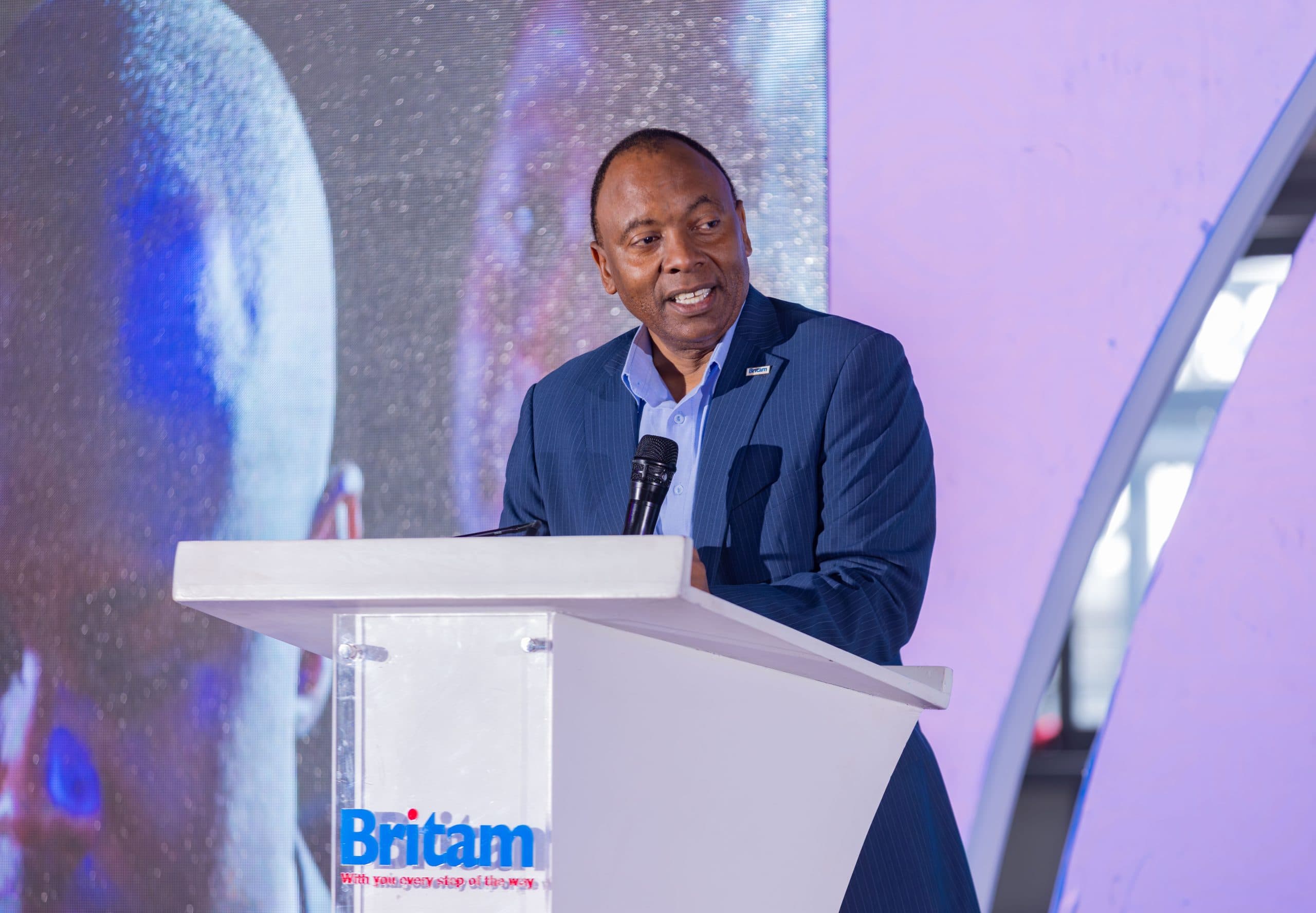
Britam Asset Managers Chief Executive Officer Barack Obatsa said the new products broaden the investment options available to customers.
“We have built our offering from accessible local investments to a wider range of opportunities, and these funds extend that choice across global markets and asset classes, backed by the research, expertise and risk management of a professional investment manager,” Obatsa said.
Investors should use the offering documents, rather than promotional descriptions alone, to assess the strategy, costs and risks.
Which fund should you choose?
The choice ultimately depends on what the investor wants from the portfolio.
The Britam Enhanced Global Equities Special Fund may be worth examining for someone seeking exposure to international companies and industries. The Britam Multi-Asset Special Fund may be worth examining for someone looking for a portfolio spanning equities, fixed income and commodities across local and global markets.
As Kenya’s collective investment scheme industry grows, investors have more options to consider. But a wider choice of products also makes it important to understand what is being purchased, how much it costs and what could cause its value to fall.
The most useful starting point is therefore not the promise of higher returns, but a clear understanding of the investment, its risks and the role it would play in a person’s broader financial plan.
>>> Britam Urges Kenyans To Review Insurance Cover Ahead Of El Niño Rains



Comments
No comments yet. Be the first to share your thoughts.