
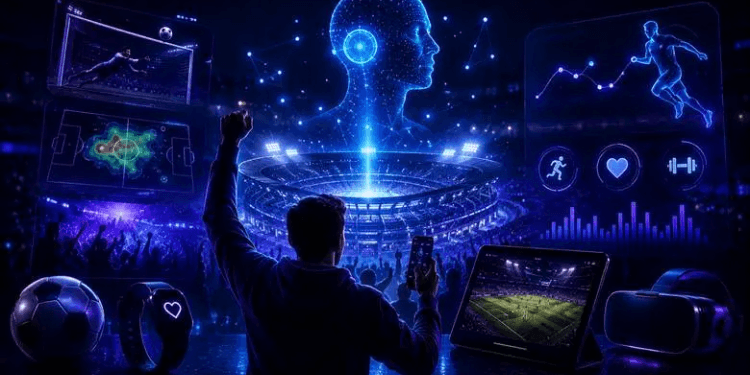
Watching sport has always been about more than the final score. Artificial intelligence (AI) has entered that experience and is changing what fans see, how they see it, and how they interact with sport when a game is not being played.
The change is happening across broadcast, data platforms, and the tools fans use to follow their teams from anywhere in Africa.
AI Enters the Sports Industry
AI sports analytics started as a tool for coaches and scouts. Clubs used machine learning models to evaluate player performance, identify recruitment targets, and build tactical models before matches. That application is now standard practice across professional football, basketball, and cricket.
The same technology has since moved toward the fan-facing side of sport. Broadcasting companies, streaming services, and sports data platforms all use AI to process information faster than human analysts and deliver it in formats that non-specialist fans can understand.
A single football match produces millions of data points across player movement, ball position, and event timing. Without AI processing that volume, most of it would never reach the audience in a usable form.
Personalized Match Experiences
Fan engagement used to be a broadcast decision. A director chose what the camera showed, and every viewer saw the same feed. AI has changed that by making personalization at the individual level technically viable.
Streaming platforms now offer viewing modes that adjust which camera angles appear based on viewer behavior. A fan who consistently watches from the goalkeeper’s perspective during set pieces will see more of that angle automatically, without adjusting any settings manually.
Highlight generation has also changed. AI systems identify the moments a specific fan is most likely to care about based on their viewing history and serve personalized clips within minutes of a match ending. Two fans supporting different teams watching the same game receive different highlight packages automatically.
This level of personalization was not possible at scale three years ago. The infrastructure behind it has matured enough to operate across millions of simultaneous viewers without significant lag or error rates.
Smart Statistics and Real-Time Insights
Sports technology has made performance numbers accessible to audiences who would not have engaged with traditional statistics. Expected goals, pressing intensity, and sprint distance metrics now appear in mainstream broadcasts because AI systems calculate and display them in real time without manual data entry.
Live sports data feeds have become the foundation for a growing range of fan-facing products. The following applications now use live data as their core input:
- Fantasy sports platforms that update scores and projections during matches in real time.
- Second-screen apps that display formation maps and heatmaps alongside live broadcasts.
- Prediction tools that recalculate win probabilities after each significant event in a game.
These products would not function without the infrastructure that collects and processes match data continuously throughout every game, a pipeline that AI systems manage at a scale human operators could not maintain manually.
How Fans Engage Beyond the Game
The 90 minutes of a match represent a fraction of the time fans now spend engaged with sport. Discussion, analysis, and content consumption continue for hours and days after the final whistle.
Digital platforms serving sports audiences use AI to surface relevant content, recommend discussions, and connect fans with topics they are most likely to engage with. Interactive platforms like Pin Up, alongside other digital sports services, use real-time match data and behavioral signals to build experiences that keep fans connected between live events rather than only during them.
Digital fan experience design has become a discipline of its own, drawing from gaming, social media, and broadcast to create environments where sports content is interacted with, not just consumed.
What Comes Next for Sports Technology
The table below shows where AI investment in sports fan experience is focused for the 2026 to 2028 period:
| Application | Current Stage | Expected Development |
| Personalized broadcasts | Available on select platforms | Wider rollout across Africa |
| Real-time tactical analysis | Available to broadcast partners | Fan-facing versions launching |
| AI-generated commentary | Experimental | Localized language versions |
| Predictive fan alerts | Available in fantasy platforms | Integration with live streaming |
The localization row matters particularly for African audiences. Commentary and analysis delivered in local languages significantly increases engagement compared to content produced for global English-speaking audiences only.
The next phase will also connect fan behavior to physical experiences. Stadiums across Africa are testing systems that use mobile data to manage crowd flow and personalize in-venue content based on supporter identity, creating a continuous experience between digital and physical environments.
In conclusion, AI has moved from the coaching room to the living room. The fan experience in 2026 is faster, more personalized, and more interactive than it was three years ago, and that pace of change is not slowing down.
Follow our and X Account for real-time news updates.



Comments
No comments yet. Be the first to share your thoughts.