
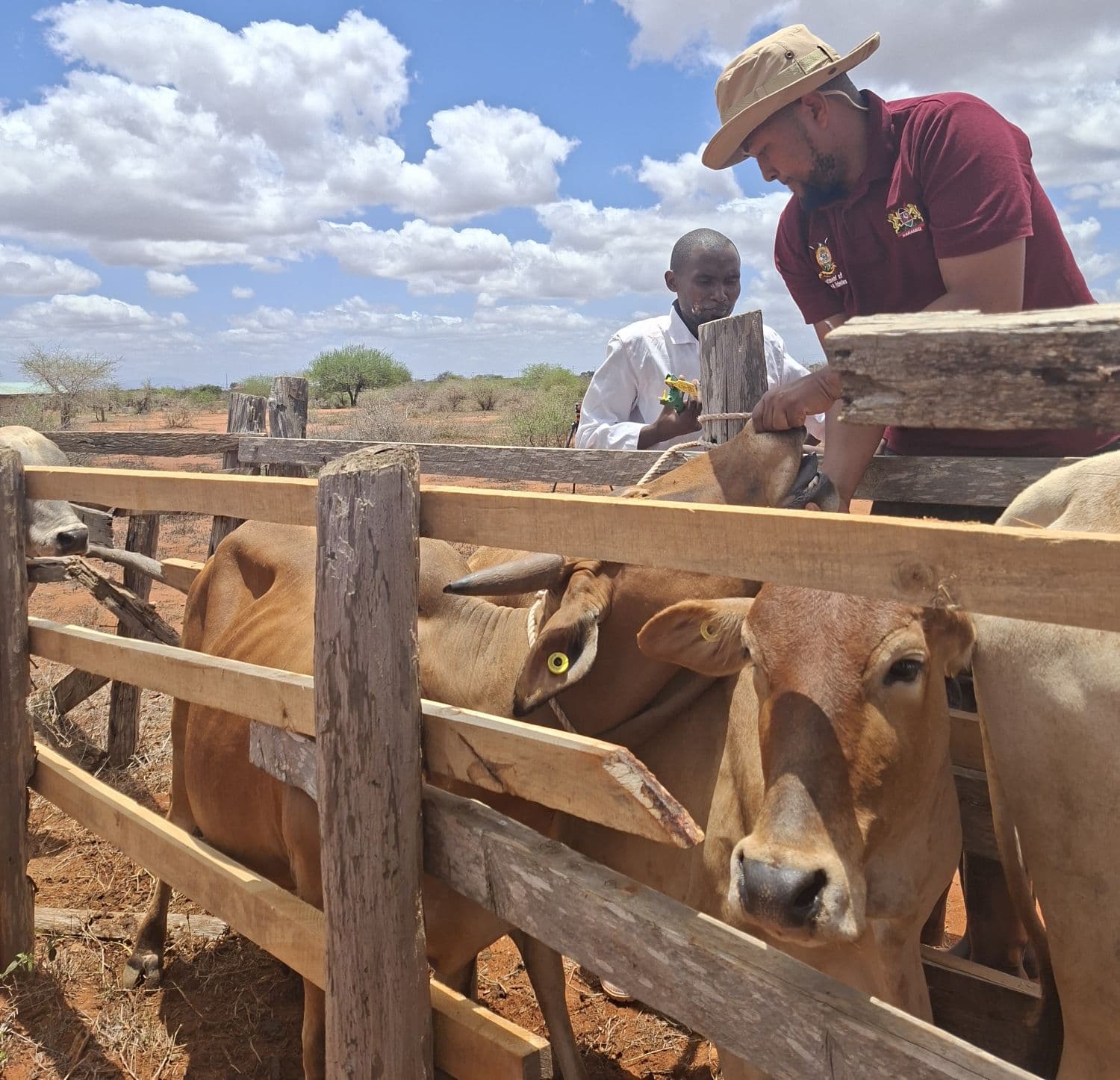
Taita Taveta County produces barely a fraction of its dairy potential, with farmers missing out on an estimated Sh4.63 billion in annual earnings because of low milk production, weak cooperative structures, and poor use of available market opportunities.
The county currently produces about 10,000 litres of milk daily from an estimated 10,000 dairy cows kept by 6,500 farmers, compared with a potential 195,000 litres per day, according to the Department of Livestock Production.
County Executive Committee Member (CECM) for Livestock Production Dawson Katuu Mzenge has challenged dairy farmers to increase production and strengthen their cooperative societies to help unlock the sector’s enormous economic potential.
Speaking during a meeting of dairy farmers from Voi, Mwatate, Taita and Taveta sub-counties, Mzenge said increased milk production, organised marketing and collective investment were critical to transforming dairy farming into a reliable source of household income.
He identified New Kenya Cooperative Creameries (New KCC) Miritini as a strategic market outlet whose potential remains underexploited, urging farmers to organise themselves and increase milk deliveries to enable them to take advantage of the processing infrastructure.
The Miritini facility presents an important opportunity for farmers in Taita Taveta and the wider Coast region to access formal milk markets, reduce dependence on fragmented marketing arrangements and benefit from value addition.
The call for stronger cooperatives comes amid concerns over the limited number of functional dairy farmer societies in the county.
Chief Officer for Livestock Production Mcharo Mwalugha said the county had only 11 active dairy cooperative societies, a situation that had weakened farmers’ bargaining power and limited their ability to pool resources, exchange knowledge and benefit from economies of scale.
He urged more farmers to join existing cooperatives or form new ones and strengthen their governance structures to improve milk aggregation, market access and the implementation of government-supported dairy development initiatives.
Mwalugha said organised farmers would be better positioned to take advantage of interventions by both levels of government, including investments in production, value addition and market linkages, ultimately increasing the returns reaching individual households.
To address feed shortages and improve productivity, the county government has established 14 fodder demonstration sites through the National Agricultural Value Chain Development Project (NAVCDP), alongside a 10-acre fodder multiplication centre supported through the Financing Locally-Led Climate Action (FLLoCA) programme.
The initiatives seek to improve access to quality animal feeds, strengthen farmers’ capacity to manage fodder production and reduce the effects of seasonal feed shortages on milk yields.
During the meeting, farmers also elected new officials to the Taita Taveta Dairy Cooperatives Union in an effort to strengthen coordination and representation of dairy farmers at county level.
The new leadership is expected to streamline the county’s dairy cooperative structures and facilitate the union’s integration into the larger Pwani Dairy Cooperative Union, potentially opening up wider opportunities for milk aggregation, collective bargaining and market access.
The renewed push to commercialise dairy farming aligns with the Government’s Bottom-Up Economic Transformation Agenda (BETA), which identifies dairy as a priority value chain for raising smallholder incomes, expanding formal milk marketing and strengthening agro-processing.
Nationally, the dairy sector has recorded steady growth since the government set a target in 2024 to nearly double annual milk production from approximately 5.2 billion litres to 10 billion litres.
Production reached 5.52 billion litres in 2025, up from 5.33 billion litres in 2024, according to the Kenya National Bureau of Statistics. The increase has also seen Kenya overtake Egypt to become Africa’s leading milk producer, with annual output estimated at 5.4 billion litres in August 2026.
Despite this national growth, Taita Taveta’s dairy sector remains significantly below its estimated potential, underscoring the need for increased farm-level productivity, stronger farmer organisations and reliable market linkages to ensure local farmers benefit from the country’s expanding dairy industry.
By Arnold Linga Masila



Comments
No comments yet. Be the first to share your thoughts.