
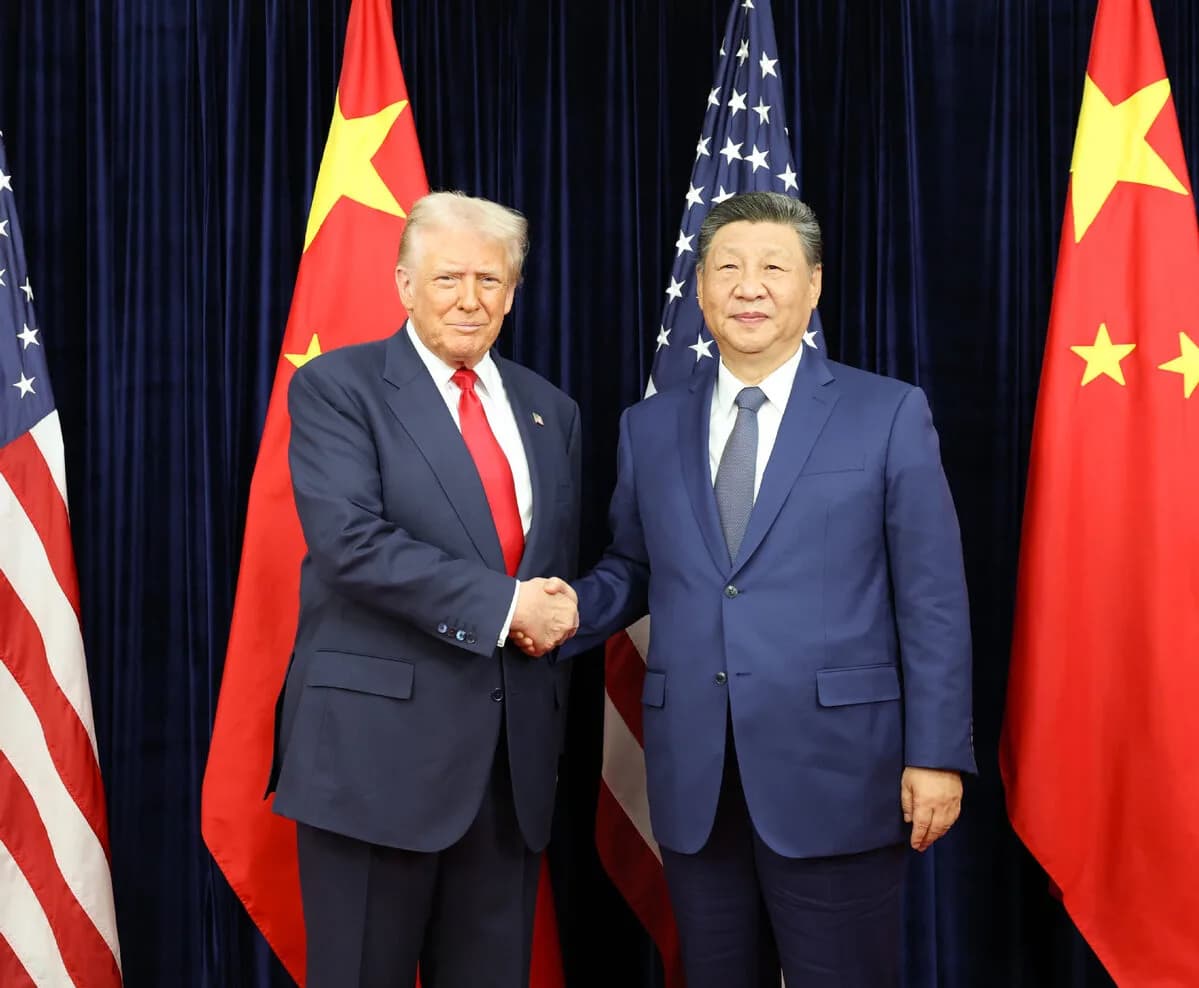
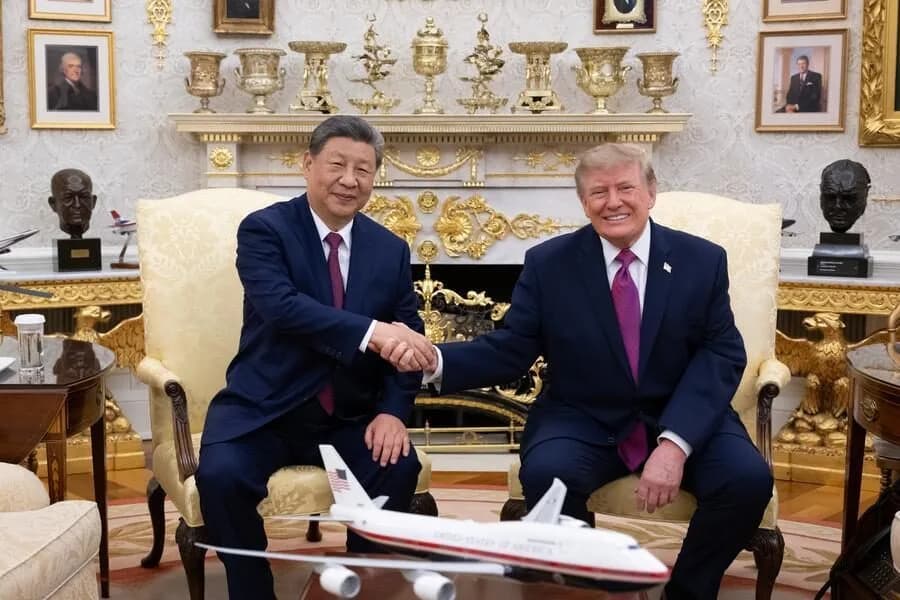
The recent meeting between Chinese President Xi Jinping and United States President Donald Trump in Washington did not produce a dramatic reset in relations between the world’s two largest economies. Nor did it resolve the fundamental disagreements over trade, technology, Taiwan or strategic trust.
What it produced instead was something more practical. The two sides agreed on a series of measures intended to prevent competition from sliding into confrontation and to give diplomacy greater space to manage their differences.
Following Xi’s September 23–25 state visit to the United States, the two presidents announced eight areas of understanding covering strategic stability, trade, law enforcement, artificial intelligence and international cooperation. They also agreed to strengthen military crisis communication and maintain engagement through multilateral platforms such as APEC and the G20.
At the heart of the outcome is an argument Beijing has consistently advanced in its dealings with Washington. China and the United States can compete without becoming enemies.
Xi has sought to frame Chinese development and American renewal as potentially compatible rather than inherently contradictory. During the Washington visit, he called for a relationship in which cooperation remains possible, competition is kept within limits, differences are managed and peace remains attainable.
That proposition is particularly significant because Washington has increasingly approached China through the language of strategic competition, technological security and supply-chain resilience.
The United States has legitimate interests in protecting critical technologies, strengthening domestic production and reducing vulnerabilities in strategic supply chains. China, meanwhile, has increasingly become central to global manufacturing, technology and critical-mineral supply networks.
The result is a relationship in which economic interdependence and strategic competition exist simultaneously.
The latest summit did not eliminate that contradiction. Instead, it acknowledged that neither side can simply wish it away.
The economic arrangements reached in Washington illustrate the point. The two countries endorsed the outcomes of their economic and trade consultations, including the establishment and operation of a bilateral Board of Trade and an arrangement involving about US$30 billion in reciprocal tariff reductions. They also agreed to extend previous economic and trade understandings, providing additional time for negotiations.
These measures do not amount to the end of the trade dispute. They represent an attempt to place limits on its escalation.
That distinction matters. In a relationship this consequential, managing disagreement can sometimes be more realistic than expecting disagreement to disappear.
Artificial intelligence offers another example.
Technology has become one of the most sensitive areas of US-China competition, with both countries seeking advantages in advanced computing, chips and artificial intelligence. Yet the two governments have agreed to establish a China-US AI Dialogue to discuss the risks and benefits associated with the technology. They will also establish a communication channel for AI-related incidents, with the next dialogue scheduled for November.
The significance of this arrangement extends beyond technology policy. AI is developing faster than many existing regulatory and diplomatic frameworks. If competing powers cannot communicate when problems arise, technological rivalry could create new avenues for misunderstanding and escalation.
The decision to strengthen military crisis communication is therefore equally important. The two militaries agreed to work towards a memorandum of understanding on crisis communication and prevention. Such mechanisms do not resolve strategic disagreements, but they can reduce the risk that an incident becomes a larger confrontation.
The human dimension of the relationship also remains relevant. Xi has repeatedly emphasised the importance of people-to-people exchanges, alongside cooperation in trade, finance, law enforcement and other areas.
This reflects a broader Chinese argument that relations between major powers cannot be sustained entirely through strategic calculations. Public attitudes, educational exchanges, business relationships and cultural contacts can also influence the resilience of bilateral ties.
None of this means that China and the United States have overcome their differences.
Taiwan remains one of the most sensitive questions in the relationship. Technology restrictions remain contentious. Critical minerals remain a strategic issue. Trade disputes have been managed rather than eliminated. And years of rivalry have left both governments with substantial reservations about the intentions of the other.
The summit should therefore not be mistaken for a new era of harmony.
Its significance lies in demonstrating that cooperation and competition can exist within the same relationship.
The United States can protect its economic and technological interests while maintaining dialogue with China. China can pursue its development and defend its interests while continuing to engage Washington. Neither requires the other to abandon its national priorities.
This is where the wider question of China’s rise becomes important.
For Beijing, the central argument is that Chinese development should not automatically be interpreted as evidence of American decline. The United States, for its part, has no obligation to accept every consequence of China’s rise without scrutiny.
The real issue is whether Washington and Beijing can pursue their respective interests without turning every disagreement into a zero-sum contest.
The Washington summit suggests that both sides recognise the costs of unmanaged rivalry.
Their agreement to support each other’s hosting of the APEC Economic Leaders’ Meeting and the G20 Summit is another indication that the relationship cannot be separated from the wider international system.
This matters because instability between the world’s two largest economies extends well beyond their borders. Trade, investment, technology, commodity markets and global supply chains are all affected by the quality of the US-China relationship.
The choice before Washington, therefore, is not simply whether to compete with China. Competition is already a reality.
The more consequential question is what form that competition will take.
It can be a competition bounded by dialogue, economic engagement, crisis-management mechanisms and mutual recognition of legitimate interests. Or it can become an increasingly comprehensive contest in which cooperation is treated as a concession and every Chinese advance is interpreted primarily as a challenge to American power.
China has presented the first option as the basis for coexistence.
Whether the United States accepts that proposition remains uncertain. The agreements reached in Washington will ultimately be judged not by the language surrounding the summit but by their implementation.
For now, however, the meeting has created something both countries need: diplomatic space.
Space to negotiate trade. Space to communicate on artificial intelligence. Space to manage military risks. Space to maintain engagement even when strategic differences remain profound.
The Xi-Trump meeting was not a grand détente. It was a test of whether two competing powers can prevent rivalry from becoming confrontation.
China came to Washington offering a framework centred on stability, dialogue and coexistence. The question now is whether Washington will use the space created by that engagement to manage China’s rise as a strategic reality rather than treating it as a problem that can only be resolved through competition for primacy.

Comments
No comments yet. Be the first to share your thoughts.