
IGAD, partners launch regional training to tackle shortage of animal health laboratory auditors

IGAD and regional partners have launched a five-day training programme to address the shortage of qualified auditors and strengthen early detection of deadly diseases across Africa.
A shortage of qualified animal health laboratory auditors is threatening the region’s ability to detect deadly diseases before they cross borders, prompting regional health bodies to launch a training programme aimed at strengthening disease surveillance and emergency preparedness.
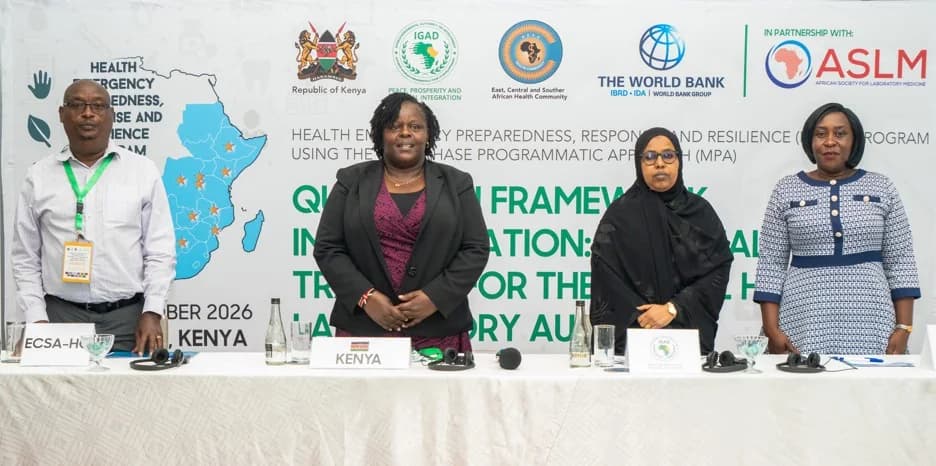
The Intergovernmental Authority on Development (IGAD), in partnership with the East, Central and Southern Africa Health Community (ECSA-HC) and the African Society for Laboratory Medicine (ASLM), launched the five-day regional workshop in Kenya on Monday, October 19.
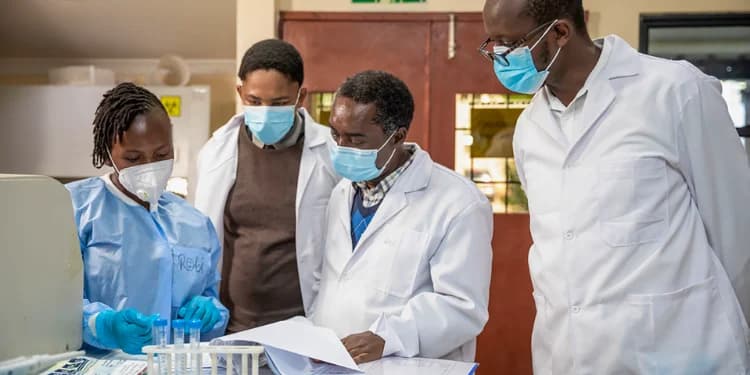
The programme aims to train laboratory auditors and trainers capable of assessing laboratory performance, identifying weaknesses and helping facilities improve testing standards.
IGAD Head of Mission to Kenya, Ambassador Dr Fatuma Adan, said countries must invest in preparedness before disease outbreaks occur, rather than waiting until emergencies emerge.
“Preparedness cannot begin when an outbreak starts. It must be built through strong systems, competent personnel, and quality-assured laboratories that can rapidly detect and characterize health threats before they spread across borders,” Dr Fatuma said.
She said the training would help participating countries establish a network of skilled auditors to assess laboratory performance, identify gaps and guide improvements.
Latest Stories
- Sonko wants impeachment overturned after Supreme Court upholds misconduct findings against former judge
- COP17 puts governments on the spot over failure to halt global biodiversity loss by 2030
- India delivers 11 tonnes of emergency medical supplies to bolster Kenya’s defences against Ebola
- Legal experts warn Ruto-Natembeya political showdown threatens devolution and good governance
Adan also emphasised the need for countries to work together, share information and adopt common standards to strengthen regional disease surveillance.
Kenya's Deputy Director of Veterinary Services, Dr Romona Ndanyi, said the shortage of qualified auditors remained a major challenge for animal health laboratories across the region.
“Currently, our region faces a shortage of certified, highly trained animal health laboratory auditors,” Ndanyi said.
In a separate report on Kenya's laboratory capacity, Ndanyi said the country had only nine qualified auditors, an insufficient number to meet growing demands.
She attributed the shortage partly to staff retirements and the loss of trained personnel. Kenya also needs specialists to assess laboratories operated by county governments and those managed by the Directorate of Veterinary Services.
Ndanyi warned that limited local expertise could force countries to depend on external specialists, increasing costs and delaying laboratory assessments.
She said the workshop would equip participants with the skills to evaluate laboratories, identify weaknesses in their quality management systems and mentor other laboratory workers in their respective countries.
Participants are expected to return home and train additional personnel, enabling countries to build local expertise and reduce their dependence on external specialists.
Animal health laboratories play a critical role in detecting diseases that affect livestock and infections that can spread from animals to humans. Reliable laboratory results enable authorities to respond swiftly to outbreaks, protect livestock, improve food safety and minimise disease-related economic losses.
The region continues to face threats from diseases such as Ebola, Marburg virus disease, Mpox, cholera and Rift Valley fever, making early detection and effective surveillance increasingly important.
Senior medical epidemiologist at IGAD, Dr Waqo Gufu Boru, said stronger animal health surveillance could help authorities identify certain threats before they spread to humans.
“With a strong surveillance system in animal health, you can pick before it reaches human beings. You should be able to pick that in the animals,”Dr Waqo said.
The approach reflects the One Health principle, which recognises the close links between human, animal and environmental health. It encourages health and veterinary authorities to share information and coordinate responses to emerging threats.
The training focuses on the QualiPATH Framework, which provides a step-by-step process for improving laboratory quality management and preparing facilities to meet international standards.
The framework is guided by the principles of ISO/IEC 17025, an international standard used to assess the competence of testing and calibration laboratories.
QualiPATH enables laboratories to measure their progress, identify weaknesses and implement improvements over time. However, completing an assessment under the framework does not automatically mean a laboratory has obtained international accreditation.
ECSA-HC representative Dr Linus Odawo said the initiative would complement efforts to strengthen human health laboratories, while IGAD focused on animal health facilities.
“Quality has got no limits and quality has got no boundaries,” Dr Odawo said, urging participants to share their knowledge and promote consistent standards across countries.
He also called for continued reviews of the QualiPATH Framework to ensure it remains effective in improving laboratory quality.
The workshop brings together participants from Kenya, Mozambique, Zambia, Rwanda, the Democratic Republic of the Congo, São Tomé and Príncipe, Malawi, Ethiopia and Burundi.
It is being conducted under the Health Emergency Preparedness, Response and Resilience Programme for Eastern and Southern Africa (HEPRR-MPA), which aims to strengthen countries' capacity to prepare for, detect and respond to health emergencies.
Organisers expect the training to establish a network of auditors who can support laboratory assessments, train other professionals and help facilities strengthen their quality management systems.
The initiative is also expected to promote cross-border cooperation through shared expertise and the adoption of consistent laboratory standards.

Comments
No comments yet. Be the first to share your thoughts.