
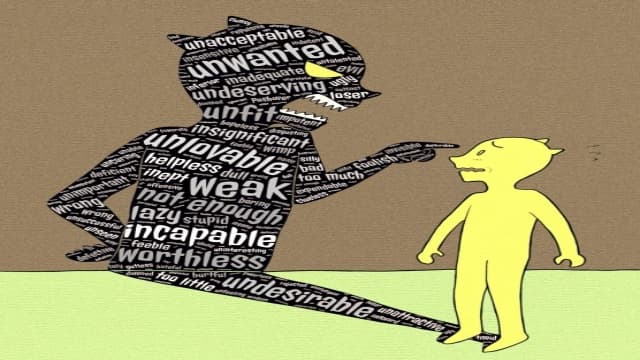
Have you ever wanted to do something meaningful, but a voice in your head told you that you weren’t good enough? Have you procrastinated on a project you care about, talked yourself out of an opportunity, spent money impulsively despite your financial goals, or avoided something because you were afraid of failing?
That could be your inner saboteur at work.
Inner saboteurs are the habitual thought patterns, beliefs and behaviours that get in the way of your happiness, growth and success. They can make you doubt yourself, avoid discomfort, seek approval, overthink decisions or repeat habits that don’t serve you.
The tricky part? They often don’t feel like sabotage. They can feel like protection, preparation, ambition, or even common sense.
The goal isn’t to eliminate every negative thought. It’s to recognise the patterns that hold you back and learn to respond differently.
1. What are the different types of inner saboteurs?
One popular framework comes from Shirzad Chamine’s book Positive Intelligence. It describes a Judge and nine accomplice saboteurs. These are useful labels for recognising patterns, not clinical diagnoses.

1. The Judge — The inner critic
Typical thought: “What’s wrong with me?”
This voice constantly criticises you, other people, and your circumstances. It magnifies mistakes, compares your progress with other people’s and makes you feel that you are never doing enough. It sabotages you in the following ways. Low self-esteem, shame, perfectionism and difficulty celebrating achievements.
Separate facts from judgments. Instead of “I’m a failure,” say, “This attempt didn’t work. What can I learn from it?”

2. The Stickler — The perfectionist
Typical thought: “If it’s not perfect, it’s not good enough.”
You set extremely high standards, focus on small details, and struggle to finish or delegate work. It sabotages you through burnout, procrastination, frustration, and missed opportunities.
Dealing with it. Decide what “good enough” looks like before starting. Set deadlines, limit revisions, and practise completing things without perfecting every detail.

3. The Achiever — The validation seeker
Typical thought: “I am what I accomplish.” Your identity becomes tied to productivity, success, recognition or external approval. Rest can feel like laziness, and failure can feel like a personal indictment.
Here is how it sabotages you: overworking, neglecting relationships, tying self-worth to performance and struggling to rest.
Here’s how to deal with it. Build an identity beyond achievement. Ask yourself, “Who am I when I’m not producing anything?” Make room for relationships, play and rest without having to earn them.

4. The Pleaser — The approval seeker
Typical thought: “People must be happy with me.” You prioritise other people’s needs, avoid saying no, and may agree to things that leave you exhausted or resentful.
Here is how it sabotages you. Weak boundaries, neglected needs, and relationships built on overgiving.
Here is how to deal with it. Practise saying no without overexplaining. Remember that being kind doesn’t require abandoning yourself. Ask, “Am I doing this because I genuinely want to, or because I’m afraid of disappointing someone?”

5. The Avoider — The discomfort escape artist
Typical thought: “I’ll deal with it later.” You focus on pleasant tasks while postponing difficult conversations, boring responsibilities or uncomfortable emotions.
Here is how it sabotages you. Unfinished projects, mounting stress, and unresolved problems.
Here’s how to deal with it. Break the task into a small first step. Commit to five minutes. You don’t have to feel ready before you begin; sometimes readiness follows action.

6. The Hyper-Rational — The overthinker
Typical thought: “Feelings are distractions. I need to figure this out.” You rely heavily on logic and analysis, sometimes at the expense of emotions, intuition, and connection.
Here is how it sabotages you: Emotional distance, analysis paralysis and difficulty asking for or receiving support.
Here’s how to deal with it. Make room for both logic and emotion. Ask, “What do I know? What do I feel? What do I need?” Not every feeling needs to be solved; sometimes it needs to be acknowledged.

7. The Hyper-Vigilant — The worrier
Typical thought: “Something is bound to go wrong.” You constantly scan for potential problems, anticipate worst-case scenarios, and struggle to feel safe or relaxed.
How it sabotages you: Anxiety, exhaustion, indecision, and difficulty enjoying the present.
Here’s how to deal with it. Distinguish a real problem from a possible future problem. Make a reasonable contingency plan, then return your attention to what you can control now.

8. The Restless — The perpetual seeker
Typical thought: “I’ll be happy when I get to the next thing.” You constantly seek new experiences, projects, goals or distractions. Staying with one thing—or sitting quietly with yourself—feels uncomfortable.
How it sabotages you: Abandoned projects, lack of fulfilment, and a constant sense that something is missing.
Here’s how to deal with it. Practise finishing before starting something new. Spend time enjoying what you have already achieved. Ask, “Am I pursuing this because it matters to me, or because I want to escape how I feel right now?”

9. The Victim — The helplessness narrative
Typical thought: “Why does this always happen to me?”
You may dwell on disappointment, feel misunderstood or struggle to see what choices remain available to you.
How it sabotages you: Hopelessness, withdrawal and difficulty taking constructive action.
How to deal with it: Acknowledge the pain without dismissing genuine hardship. Then ask, “What is one thing within my control?” Taking responsibility for your next step doesn’t mean blaming yourself for what happened.

10. The Hyper-Achiever’s cousin? The Hyper-Vigilant is above; this is the Controller.
Typical thought: “If I don’t take charge, things will fall apart.” You feel compelled to direct situations, control outcomes or make sure other people do things your way.
How it sabotages you: Conflict, micromanagement, difficulty trusting others and unnecessary stress.
Here’s how to deal with it. Identify what genuinely belongs to you to manage. Delegate, invite other perspectives and practise tolerating uncertainty without immediately intervening.
2. Why do we develop inner saboteurs?
These patterns often develop for understandable reasons. They may once have helped us cope with difficult situations, fit in or feel safe.
For example:
-
Fear of failure: If mistakes were punished or criticised, perfectionism can feel like protection.
-
Fear of rejection: If love or approval felt conditional, people-pleasing can become a way of maintaining relationships.
-
Fear of uncertainty: If life has been unpredictable, excessive planning or control can provide a temporary sense of safety.
-
Past disappointment: If you have tried and failed before, avoiding another attempt can protect you from feeling that pain again.
-
Conditional self-worth: If you were praised mainly for achievements, you might learn to measure your value by how much you accomplish.
-
Uncomfortable emotions: If sadness, anger or vulnerability felt unsafe, busyness, distraction or excessive rationalisation may become coping mechanisms.
The important distinction is this: a behaviour can begin as protection and eventually become a limitation. You don’t need to hate the part of yourself that developed the pattern. You need to understand what it is trying to protect you from and find a healthier response.
How do you deal with your inner saboteurs?
Understanding your patterns is the beginning. The next step is learning to interrupt them.
Step 1: Notice the voice
Pay attention to recurring thoughts, especially when you feel anxious, ashamed, frustrated or tempted to give up.
Instead of saying, “I’m lazy,” try, “I’m noticing that I’m avoiding this task.” That small shift separates your identity from your behaviour.
What happened immediately before the pattern appeared?
Did someone criticise you? Did you compare yourself with a colleague? Did a task feel too big? Were you tired, lonely, overwhelmed or afraid of being judged?
Look for patterns rather than treating every incident as an isolated event.
Step 3: Ask what the saboteur is trying to protect
A useful question is, “What am I afraid would happen if I didn’t behave this way?”
Perfectionism might be trying to protect you from criticism. People-pleasing might be protecting you from rejection. Procrastination might be protecting you from the possibility of failure.
You can appreciate the protective intention without accepting the behaviour as helpful.
Step 4: Challenge the thought
Ask yourself:
-
Is this thought a fact or an assumption?
-
What evidence supports it? What evidence contradicts it?
-
Am I imagining the worst possible outcome?
-
What would I say to a friend who had this thought?
-
Is there a more balanced interpretation?
The goal is not forced positivity. It is more accurate, flexible thinking.
Take one small action
Don’t wait until the fear disappears.
-
Afraid to publish? Finish and share one piece.
-
Overthinking a decision? Set a deadline and choose using the information available.
-
Avoiding exercise? Put on your trainers and take a ten-minute walk.
-
Struggling to set boundaries? Say, “Let me check my schedule before I commit.”
-
Feeling unworthy? Apply for the opportunity anyway.
Small actions give you real evidence that you can behave differently.
Practise a replacement habit
Don’t simply tell yourself to stop a behaviour. Decide what you will do instead.
Replace “I must get everything right” with “I will do my best and learn from the outcome.”
Replace “I can’t disappoint anyone” with “I can care about people and still have boundaries.”
Replace “I’ll start when I feel motivated” with “I’ll take one small step today.”
Practical examples: inner saboteurs in everyday life
| Situation | Saboteur’s message | A healthier response |
|---|---|---|
| You want to start a business or project. | “What if I fail?” | “I can test the idea on a small scale and learn.” |
| You receive constructive feedback. | “I’m not good enough.” | “This feedback identifies something I can improve.” |
| You want to save money but feel stressed. | “I deserve this purchase right now.” | “I deserve comfort. Let me find a way to feel better that also respects my financial goals.” |
| You want to set a boundary. | “They will think I’m selfish.” | “Their disappointment doesn’t automatically mean I’ve done something wrong.” |
| You have delayed an important task. | “I’ve already wasted so much time.” | “I can’t recover yesterday, but I can use the next 15 minutes.” |
| You compare yourself with others. | “I’m falling behind.” | “Their progress is not a measurement of my worth. What matters to me next?” |
| You make a mistake. | “I always ruin things.” | “I made a mistake in this situation. What can I repair or change?” |
The most important lesson
Your inner saboteur is not your identity. A thought is not a fact, a fear is not a prediction, and a familiar behaviour is not a life sentence.
You can acknowledge your fear without letting it make every decision. You can make mistakes without turning them into evidence that you’re inadequate. You can care for other people without abandoning yourself.
The aim is not to become a person who never doubts themselves. It is to become a person who no longer allows every doubt to dictate their actions.
A question worth sitting with is this: What is one thing I keep telling myself I cannot do, and what small step could I take this week if I stopped treating that belief as an unquestionable truth?
Check out
The Bad Voices In Your Head: How To Silence Negative Thoughts Before They Silence Your Potential



Comments
No comments yet. Be the first to share your thoughts.