
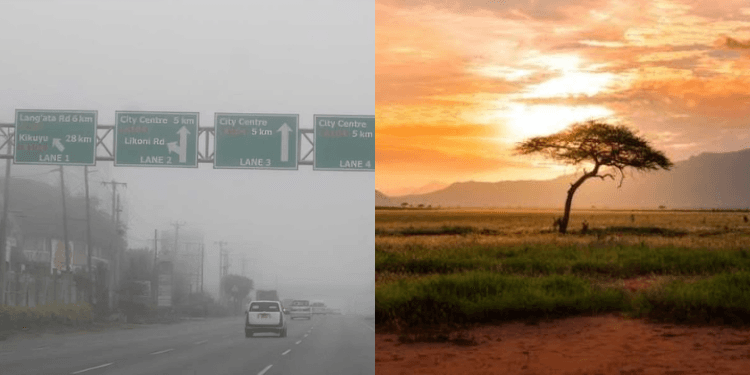
Some parts of Kenya are experiencing warmer conditions during this cold season, with the Kenya Meteorological Service attributing the changing weather patterns to several climate systems, including a developing El Niño.
According to Hannah Kimani from the Public Weather Services at the Kenya Meteorological Service, Western Kenya and the North Rift are expected to experience prolonged dry spells through September before conditions shift towards wetter weather in October and November, when above-average rainfall is forecast.
Speaking in an interview on August 7, Kimani added that El Niño is expected to intensify between October and November, with its effects likely to influence rainfall patterns across the country.
“The El Niño is expected to intensify in the October to November season. This explains why the western regions, including the North Rift, are experiencing prolonged dry spells from now, and this is expected to continue all the way up to September,” she said.
El Niño to Bring Heavy Rains After Dry Spell
According to KMS, the developing El Niño is being monitored alongside other climate drivers, including a positive Indian Ocean Dipole, which is characterized by warmer waters in the western Indian Ocean and changes in atmospheric circulation.
The expected rains are likely to increase the risk of flooding in some areas, with meteorologists urging communities to take early preparedness measures.
The call also extends to greater adoption of measures such as rainwater harvesting and climate-smart agriculture to help communities manage the expected rains and minimize the effects of extreme weather.
In addition, Hannah stated that KMS is also promoting action-based forecasting, which focuses not only on predicting weather conditions but also on explaining their likely impact and the steps communities can take to prepare.
“We are likely to experience above-average rainfall, which may cause flooding, but the message we are sending is that we need to prepare. We have been sensitizing the public on what we call the action-based forecasting initiative, which aims to move away from simply saying what the weather will be to what the weather will do,” she said.
August to October Weather Outlook
The Kenya Meteorological Department has forecast largely dry conditions across the country in August and September, with rainfall expected to increase in October as the short rains season begins.
The outlook, issued on July 30, indicates that several counties in western Kenya, the Rift Valley and northern Kenya are likely to receive below-average rainfall during the three-month period. These include Trans Nzoia, Bungoma, Busia, Kakamega, Siaya, Vihiga, Nandi, Uasin Gishu, Elgeyo Marakwet, Kisumu, Kericho, Nyamira, Kisii, Bomet, Migori, Homa Bay, Narok, West Pokot, Samburu and Turkana.
August and September are expected to remain largely dry, although some areas may experience intermittent cool and cloudy conditions with occasional light rainfall. The department forecasts scattered rainfall in October as the short rains season sets in.
The forecast indicates that Murang’a, Nyeri, Embu, Meru, Tharaka Nithi, Kirinyaga, Nyandarua, Laikipia, Kiambu, Nairobi, Machakos, Makueni and Kitui will experience occasional cool and cloudy conditions accompanied by light rainfall in August, which may extend into early September. Seasonal short rains are expected to begin in October.
Parts of Kwale, Kilifi, Mombasa, Lamu, Tana River, Taita Taveta, and sections of Garissa, Mandera, Wajir and Marsabit are expected to receive above-average rainfall, with most of the rain anticipated in October.
Despite the varying rainfall patterns, mean temperatures are expected to remain warmer than average across the country.
Follow our WhatsApp Channel and X Account for real-time news updates.




Comments
No comments yet. Be the first to share your thoughts.