
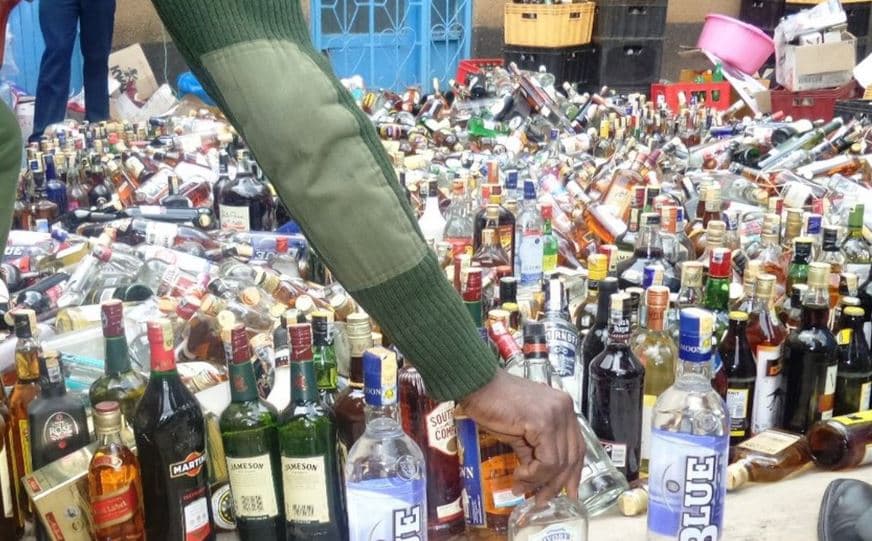
On any given Friday evening, as Kenyans gather in bars, homes and roadside dens, a parallel alcohol economy thrives alongside the formal one. Illicit liquor—ranging from traditional home brews to cheap, high-strength bottled spirits and counterfeit versions of well-known brands—accounts for roughly 60% of all alcohol consumed in the country by volume, according to a 2025 Euromonitor International study commissioned by the Alcoholic Beverages Association of Kenya.
The phenomenon carries public-health, fiscal and security costs.
Authorities link unregulated drinks to poisoning incidents, lost tax revenue estimated at about Ksh120 billion in recent years, and social strain in communities. Government agencies, including the National Authority for the Campaign Against Alcohol and Drug Abuse (NACADA), the Anti-Counterfeit Authority (ACA), police and county officials, are continuing with frequent seizures and crackdowns.
What Counts as Illicit Liquor—and What Is ‘Second-Generation’?
Illicit alcohol in Kenya broadly covers three overlapping categories: traditional artisanal brews produced without licenses or safety standards; counterfeit or adulterated versions of commercial brands; and a category popularly known as second-generation liquor.
Traditional drinks such as chang’aa, a potent distilled spirit, busaa and muratina have long cultural roots, especially in rural and peri-urban areas. When produced clandestinely, they often involve crude methods and can contain harmful contaminants, thus ‘illicit liquor’.
“Second-generation” alcohol is a more recent, commercially oriented category. It typically refers to inexpensive, high-alcohol-content spirits made by blending neutral spirit (often ethanol), water and flavorings, then packaging them in small bottles or sachets. These products generally bypass traditional fermentation and distillation processes used for regulated potable spirits.
Popular second-generation or similar brands frequently cited in enforcement actions include various low-priced vodkas and gins. Authorities have repeatedly suspended or re-vetted licenses for manufacturers in this segment, allowing only those meeting safety, tax and standards requirements to resume operations. Legitimate operators in the broader spirits sector include companies such as UDV and others that have cleared compliance checks.
From Cheap Spirits to Fake Premium Brands
Counterfeiters do not necessarily need to invent a new brand.
Sometimes, the more valuable strategy is to copy one that consumers already recognise.
The Anti-Counterfeit Authority told Parliament in May 2026 that counterfeit alcohol operations can involve the misuse of protected brands, falsified labels and the refilling of genuine bottles with unsafe products.
In April, an ACA-led operation in Nyeri uncovered equipment for sealing bottle caps and applying counterfeit excise stamps at an illicit manufacturing site.
That helps explain why a premium-looking bottle is not, by itself, proof of authenticity.
A sophisticated counterfeit operation can attempt to reproduce the appearance of a legitimate product closely enough to deceive consumers.
The problem can therefore move from the traditional image of a plastic container in a hidden distillery to something that looks as though it belongs on the shelf of a modern supermarket or in an upmarket bar.
What about White Cap?
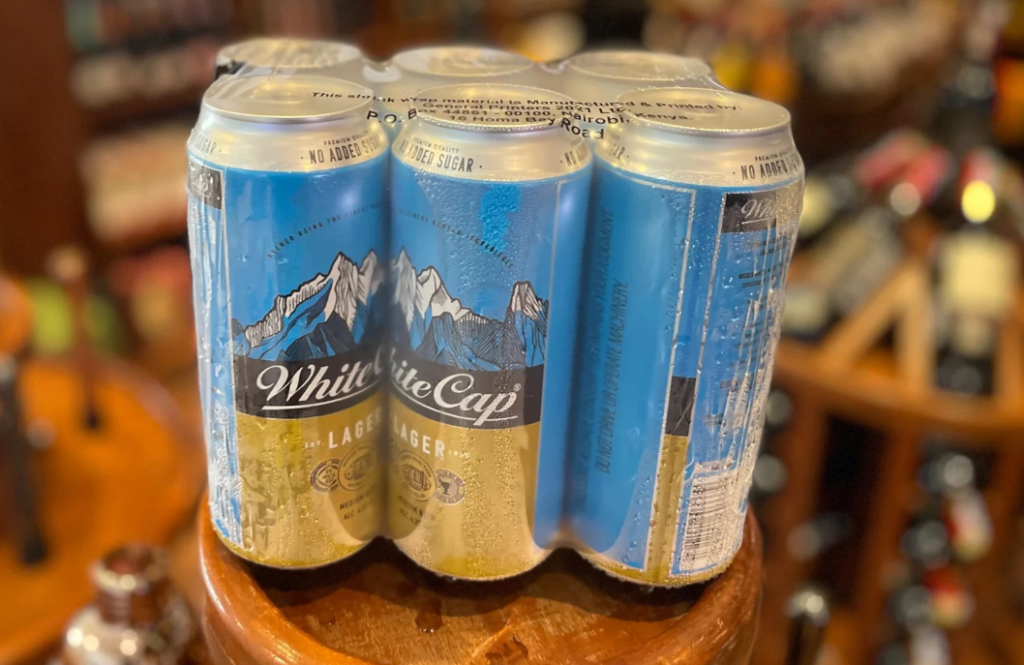
This is where consumers need to separate the brand from the counterfeit claim.
White Cap is a legitimate beer produced by Kenya Breweries Ltd. The existence of a counterfeit market does not establish that Kenya Breweries or EABL is manufacturing illicit White Cap.
At the same time, there is evidence that established alcohol brands are targets for counterfeiters.
In September 2026, Daily Nation reported that brands associated with EABL, Zheng Hong Kenya Ltd, Partiala Distiller (K) Ltd and Kenya Wines Ltd were among those identified by the Anti-Counterfeit Authority as heavily targeted by counterfeiters.
That makes the underlying consumer question reasonable: Can a genuine-looking premium beer be counterfeited?
The answer is yes.
But that is very different from saying that the legitimate manufacturer is producing counterfeit beer.
There is also a practical complication with canned products. Counterfeiters can potentially obtain genuine-looking packaging, imitate labels and markings, or introduce illicit products into legitimate-looking containers. The ACA has specifically warned that counterfeiters can misuse packaging and even refill genuine branded bottles.
Therefore, a claim circulating online that “White Cap is fake” should not be interpreted as meaning that all White Cap beer is fake.
Nor does the existence of one suspected counterfeit product establish that an entire brand or manufacturer is involved.
For consumers, the practical advice from authorities remains straightforward: purchase from licensed outlets, check for authentic tax stamps and packaging, and avoid suspiciously cheap products.
Read Also: Dangote Refinery Eyes Ksh207.1 Billion Landmark Listing



Comments
No comments yet. Be the first to share your thoughts.