
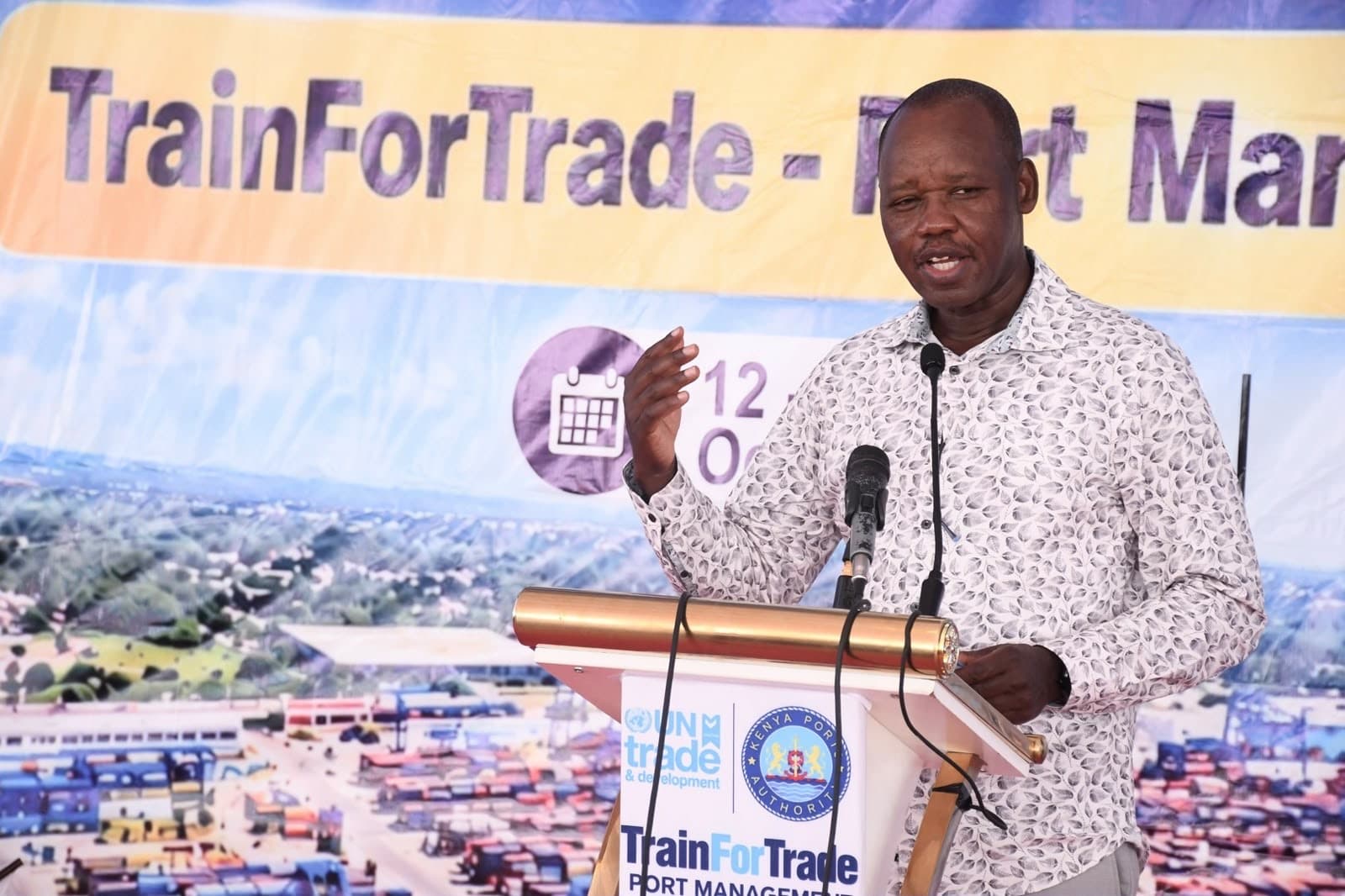
The Kenya Ports Authority (KPA) and the United Nations Conference on Trade and Development (UNCTAD) have launched a five-day training programme for senior managers aimed at enhancing skills, improving port efficiency and unlocking Kenya’s blue economy potential.
Speaking during the opening of the port management coaching workshop, dubbed TrainForTrade, in Watamu, Kilifi County, KPA Chief Executive Officer (CEO) Capt. William Ruto said the programme would strengthen port performance and enhance competitiveness.
The workshop is being held under the theme, “Strengthening Trade Decisions for Inclusive and Sustainable Development.”
The programme exposes participants to modern port management practices and equips them with practical skills in international trade and transport, port operations, commercial and financial management, performance measurement, environmental sustainability and human resource development.
It also emphasises collaboration and knowledge exchange. Through the TrainForTrade network, participants have opportunities to engage with professionals from ports across Africa, Asia, Europe and other regions, creating platforms for sharing experiences and best practices.
Capt. Ruto noted that the maritime industry continues to evolve rapidly, with port managers facing increasing operational complexity, changing trade patterns, supply chain disruptions, technological advancements, environmental obligations and growing customer expectations.
“To remain effective and competitive, ports must continuously invest in skills development, professional growth, and leadership capacity. This is the context within which, as KPA, we are glad to embrace the Train for Trade Modern Port Management Programme,” he said.
KPA has already made significant progress in implementing the programme, with eight senior managers having completed various training modules. Another 38 participants are expected to undergo the training and help facilitate knowledge transfer and programme delivery within the Authority.
The knowledge gained is expected to strengthen operational excellence and support the continued growth and competitiveness of KPA.
“This training is important in the maritime sector because it involves information sharing and partnerships with international institutions like UNCTAD,” said Capt. Ruto, adding that the Authority values career development as a means of improving service delivery and port efficiency.
The programme is also expected to accelerate Kenya’s efforts to unlock its blue economy potential by drawing lessons from more than 30 countries that have undergone similar training.
“We can only learn from those who have exploited the blue economy. In this country, the blue economy has not been exploited because of a lack of knowledge,” he said.
To ensure the programme’s sustainability, the managers who undergo the training will pass on the knowledge acquired to their subordinate staff.
“For KPA, this programme is not simply an academic exercise. It is a practical investment designed to strengthen performance across our port’s facilities and logistics operation,” said Capt. Ruto.
During the week-long programme, participants are expected to apply the knowledge acquired to improve operational planning, strengthen decision-making, enhance customer service, support innovation and contribute to continuous improvement initiatives across the Authority.
“I am confident that the dissertations and case studies developed under this programme will provide practical solutions to real operational challenges, thereby generating measurable value for our ports and stakeholders,” he said.
The training comes as the Port of Mombasa continues to record steady growth in cargo throughput and container traffic, reinforcing its position as a leading gateway to East and Central Africa. The growth has increased the demand for highly skilled port managers.
The KPA CEO affirmed that the Port of Lamu equally presents significant opportunities for future logistics, industrial, and energy developments. “These growing operations require professionals equipped with modern management skills capable of delivering efficiency, innovation, and service excellence,” stated the CEO.
Participants were encouraged to make the most of the training by actively engaging with facilitators, collaborating with their peers, challenging conventional thinking and seeking practical solutions that could be implemented in their respective work environments.
UNCTAD Chief of the Human Resource Development Section Mark Assaf said Kenya had enormous potential, noting that the country had attracted foreign direct investment and needed to retain and upskill its workforce to drive further transformation in its ports.
He observed that port operations worldwide had undergone rapid changes, including digital transformation, creating a need for new skills to keep pace with emerging developments.
“I would say you are really in a very good, strong position here in Kenya with a strong workforce of 6,500 people and all of the capacity to move ahead,” said Assaf, urging Kenya to leverage its workforce and port infrastructure to expand its presence in international markets and attract more global business.
“My message will be: take advantage of it. Go into the international market. Attract players from all around the world. You can reach out all the way to Asia, to Latin America. Open new markets because I am pretty sure that when they see what you’re capable of achieving here, they will come and will want to do business with you.” .
By Sadik Hassan


Comments
No comments yet. Be the first to share your thoughts.